The SEC Drew a Line Between Custodians and Self-Custody. Here's Where That Line Falls.
Back to articles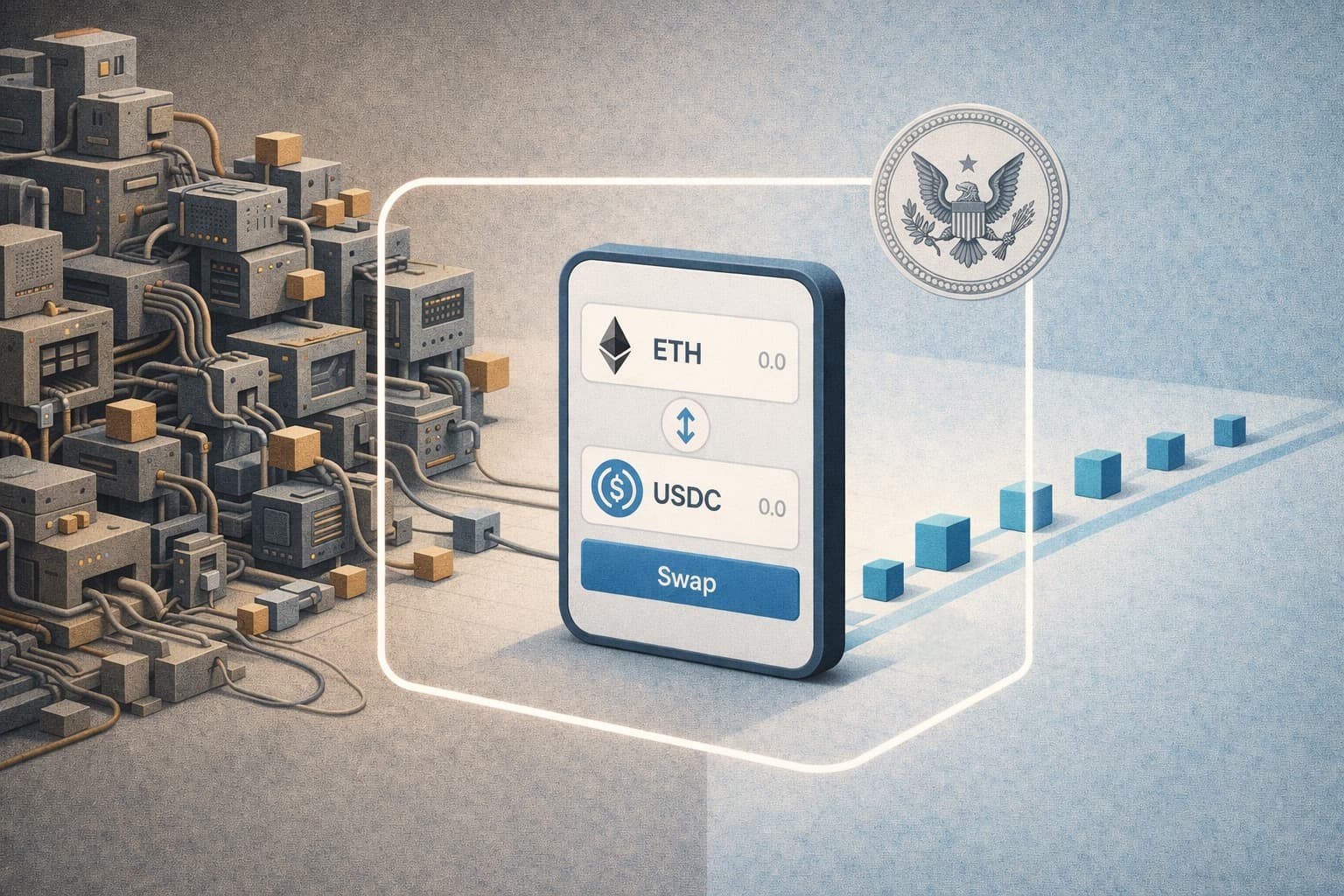
TL;DR
- On April 13, 2026, the SEC issued a staff no-action statement: certain crypto interfaces don't need to register as broker-dealers
- The guidance covers websites, browser extensions, and mobile apps that help users initiate transactions from self-custodial wallets
- To qualify, providers must meet 12 specific conditions. Holding user funds or providing investment advice disqualifies a provider outright
- The statement runs until April 13, 2031. It's not a binding rule, but a five-year documented framework with specific, testable criteria
- Burner is fully compliant: transactions are user-initiated and Burner doesn't hold your funds
- This isn't a blanket exemption. Adding order routing, fee-sharing, or investment advice triggers broker-dealer registration requirements
For the past few years, anyone building a crypto wallet interface has operated under regulatory uncertainty. The SEC's position on whether a software front-end that helps users initiate transactions qualifies as a broker-dealer has never been formally settled. That ambiguity has real costs: broker-dealer registration brings compliance requirements, custody obligations, and capital requirements that have nothing to do with giving someone a way to send USDC from a wallet they own.
On April 13, 2026, the SEC's Division of Trading and Markets issued a staff no-action statement that draws the line. Certain crypto interfaces, specifically ones that let users initiate their own transactions through self-custodial wallets, don't need to register as broker-dealers. The statement is conditional and runs for five years. For interface builders, it's the first documented framework with specific, testable criteria for staying outside broker-dealer registration.
What a Broker-Dealer Registration Actually Means
Broker-dealers are regulated entities: they can hold customer funds, execute trades, and provide securities recommendations. The framework was built for traditional financial intermediaries, the stock brokers and market makers who connect buyers and sellers.
The SEC's interest in applying that framework to crypto came from the observation that some crypto platforms operate like traditional brokers: they take custody of assets, route orders, and match buyers and sellers who don't know each other. For those platforms, broker-dealer registration isn't unreasonable.
The problem is that self-custodial wallet interfaces don't work like that. A wallet front-end doesn't hold your funds, route your order to a counterparty, or do anything except read your wallet's state and give you a way to sign transactions that you originate. Applying broker-dealer regulation to that kind of software would be roughly like requiring the website you use to view your bank balance to get a banking license.
What the Safe Harbor Actually Says
The statement covers what the SEC formally calls "Covered User Interface Providers," meaning websites, browser extensions, and mobile apps that help users prepare and submit crypto asset securities transactions through self-custodial wallets. These interfaces convert user-set transaction parameters (direction, volume, asset type, price range) into blockchain-readable commands. To qualify, a provider has to meet 12 specific conditions: affirmative requirements about how the interface is built and operated. Separately, certain activities disqualify a provider outright regardless of how the rest of the interface is structured.
The 12 conditions cover five areas: how users interact with default parameters, how execution routes are displayed and sorted, how fees are structured, what venue monitoring policies must exist, and what the provider must disclose. The chart below maps where the line falls.
| Criteria | Safe Harbor (No Registration) | Broker-Dealer Required |
|---|---|---|
| 1. Parameter control | Users adjust all default parameters; educational materials provided | Platform sets execution parameters for users |
| 2. No solicitation | Provider doesn't push users toward specific trades or assets | Provider solicits specific transactions |
| 3. Default venue selection | Provider documents which venues the interface connects to by default | No documented basis for default venue selection |
| 4. Affiliated venue disclosure | Affiliated venues disclosed; treated on same terms as unaffiliated venues | Affiliated venues given preferential or undisclosed treatment |
| 5. Alternative routes visible | If one route shown, user can access alternatives | Single route shown with no alternatives available |
| 6. Objective sorting | Multiple routes sorted by objective factors (price, speed); user controls sort | Routes ranked by undisclosed or subjective criteria |
| 7. No route commentary | No labeling of "best price" or "most reliable" | Interface steers users with subjective route labels |
| 8. Verifiable parameters | Software parameters pre-disclosed, objective, independently verifiable | Parameters opaque or at provider's discretion |
| 9. No discretion over execution | User-initiated, user-confirmed; interface has no control over transactions | Platform routes, sequences, or executes at its discretion |
| 10. Fixed, consistent fees | Fixed charge; product, venue, and counterparty agnostic; no PFOF | Variable, outcome-based fees, or payment for order flow |
| 11. Venue monitoring policies | Written policies to evaluate, onboard, and audit venues on objective factors | No formal evaluation policies; fee-sharing with preferred venues |
| 12. Required disclosures | Non-registration status, fees, conflicts, cybersecurity policies, MEV risks, venue names, default parameters | Limited or no disclosure of role, fees, or conflicts |
The SEC was explicit about a trap to avoid: adding off-chain order routing, payment for order flow, or fee-sharing arrangements with specific venues is enough to trigger broker-dealer registration requirements, even if it presents as non-custodial. The SEC stated it will treat "DeFi in name only" structures as intermediation regardless of what they're called.
SEC Commissioner Hester Peirce welcomed the guidance while pushing for more: "Crypto is forcing the Commission to confront its inner demons that have driven it toward ever more expansive readings of the securities laws." A staff statement, she argued, leaves developers exposed where a formal rule would not.
Who This Applies To and Who It Doesn't
The safe harbor is written for DeFi front-ends, wallet extensions, and mobile applications that connect users to blockchain protocols and smart contracts. If you're building software that helps users sign transactions from wallets they own and control, this guidance covers your category.
Centralized exchanges that hold customer assets don't qualify, nor do order books that custody funds and match buyers with sellers, nor platforms that provide investment advice, make trading recommendations, or take discretion over execution.
The SEC is drawing a line between infrastructure and intermediation. Infrastructure helps users interact with a system they control; intermediation involves the platform stepping between the user and the transaction. The broker-dealer framework was designed for the latter. The SEC guidance says infrastructure, when built correctly, belongs in a different category.
The SEC's own statement is clear about its limits: it reflects the views of staff, not the Commission, carries no legal force, and doesn't alter existing law or create new obligations. The agency describes it as an interim step while it works through broader crypto regulatory questions. It can be updated or withdrawn before April 13, 2031. For builders who designed to these principles already, the guidance is more confirmation than constraint.
Burner and USD2
Burner is a self-custodial hardware wallet the size of a credit card. Tap it to your phone and your wallet opens in a browser. The private key lives on the card's secure chip, and Burner never holds your funds.
USD2 is Burner's dollar-pegged stablecoin, backed 1:1 by U.S. dollars and treasury reserves through Bridge. When you pay with USD2, you're sending from your wallet directly to the merchant's address, with no intermediary in between.
The SEC guidance doesn't change how Burner operates. Burner meets the conditions as written. You can use it to protect and move your assets knowing Burner is fully compliant.
USD2: The Gasless Stablecoin Built for Everyday Use
Final Thoughts
The crypto regulatory approach has mostly taken existing rules designed for traditional finance and applied them to new technology, resolving edge cases one by one. For self-custodial wallet interfaces, that approach created years of ambiguity about whether software that never touches your money could still be classified as a financial intermediary.
The SEC guidance doesn't settle every open question in crypto regulation. It doesn't address decentralized exchanges, lending protocols, or anything involving pooled liquidity. But for the specific category of interfaces that help users initiate transactions from wallets they control, it draws a workable line with a five-year window to build against it.
What it confirms is that the design principles behind self-custody describe a system that falls outside the broker-dealer framework when implemented correctly. Users hold their own keys, initiate their own transactions, and no platform stands between them and their funds. That's the design the SEC used to define where broker-dealer regulation stops.
FAQ: SEC DeFi Guidance and Self-Custodial Wallets
❓ Is the SEC guidance legally binding?
No. The SEC's staff statement is a no-action position, not a formal rule or binding regulation. It reflects the staff's current interpretation of how existing broker-dealer laws apply to crypto interfaces. The SEC can update or withdraw it before the 2031 expiration. For developers, the practical value is that it sets out specific, documented criteria. You're not guessing at where the line is, and the agency has stated it won't take enforcement action against providers that meet the conditions.
❓ Does the SEC guidance mean crypto wallets are now unregulated?
No. The guidance applies narrowly to interfaces that help users initiate their own transactions through self-custodial wallets, without holding funds or providing investment advice. Custodial platforms, centralized exchanges, and services that make trading recommendations are still subject to broker-dealer registration. The guidance draws a line, not a blanket exemption.
❓ How long is the guidance valid?
The SEC's staff guidance has a five-year validity period from April 13, 2026. The agency described it as an interim measure while it works through broader crypto regulatory questions. Five years gives developers a stable framework to build against, but it isn't permanent.
❓ What's the practical difference between a broker-dealer and a self-custodial interface?
A broker-dealer holds customer funds, executes trades between parties, and can provide investment recommendations. A self-custodial interface is software that helps users interact with blockchain protocols using wallets they own. The distinction is whether the platform is an intermediary standing between you and your transaction, or a tool that lets you act directly.
❓ What does "self-custodial" mean?
Self-custodial means the user holds their own private keys and controls their funds directly, without relying on a third party to hold assets on their behalf. The SEC's guidance applies when transactions are initiated through the user's own self-custodial wallet, not through a platform account where the company holds the assets.

Get your Burner
What to read next
Back to articles
Coldcard's $116M Hack: Why One Entropy Source Isn't Enough
Every security feature on a hardware wallet protects the key after it exists. The recent Coldcard hack, roughly $116 million drained from more than 5,200 addresses, shows what happens when the number behind that key came from one source and the source was wrong.

Who Is Satoshi Nakamoto? The Suspects and the 2026 Hunt to Unmask Bitcoin's Creator
More than 17 years after Bitcoin's first block, no one has proven who Satoshi Nakamoto is. We go through the leading suspects, the competing answers from a 2026 documentary and the New York Times, and what Satoshi's untouched coins say about holding bitcoin yourself.
What is a Real-World Asset (RWA)? A Guide to RWAs on Base and How to Securely Store Them
A real-world asset is something that exists off the blockchain, like a US Treasury bond, a money market fund, a bar of gold, or a share of stock, represented on-chain as a token. The token isn’t a new asset with value of its own. It’s a claim on the real one, recorded on a blockchain so it can be moved, split, and held the way you’d hold any cryptocurrency.