Global Stablecoin Adoption and the Future of US Payments
Back to articles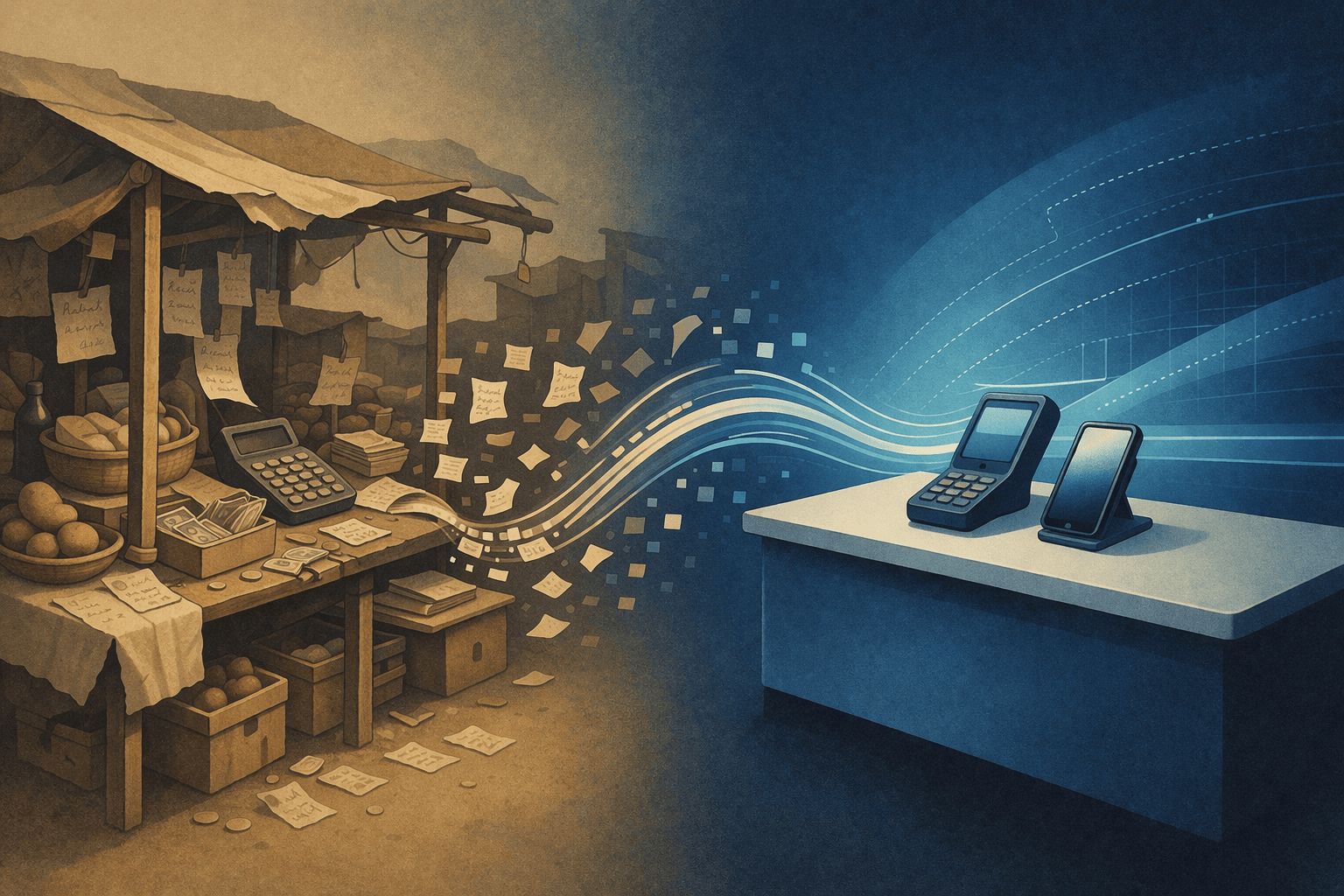
TL;DR
- Stablecoin merchant adoption is already part of everyday commerce in Venezuela, Argentina, Brazil, and Nigeria
- Remittance fees average 6.49% globally; stablecoin transfers cost less than a penny. MoneyGram and Western Union are already integrating stablecoin settlement
- In the US, Visa, Stripe, Shopify, and Fiserv are building stablecoin infrastructure ahead of merchant adoption
- 58% of US corporates plan to adopt stablecoins within two years, with cross-border payments as the top use case
- US regulation and infrastructure are ready. Burner Terminal lets merchants accept stablecoins alongside cards without the 2.5-3.5% processing fees
The US already leads the world in stablecoin volume. What it doesn't have yet is widespread stablecoin merchant adoption, small businesses actually accepting stablecoin payments for everyday commerce.
That part happened somewhere else first. In Venezuela, Nigeria, Argentina, and Brazil, stablecoins didn't take off as trading instruments or treasury tools. They took off as payment rails, stress-tested by the merchants and consumers who needed them most.
Venezuelan street vendors print receipts in "Binance dollars" (USDT). Nigerian businesses switched to stablecoins when the Naira lost two-thirds of its value. Brazil's stablecoin volume hit $89 billion in 2025, 90% of the country's entire crypto flow.
Those merchants adopted stablecoins because their existing financial systems were failing them, often without strong regulatory frameworks or reliable infrastructure to fall back on. The US has both the regulatory framework and the infrastructure, yet widespread merchant adoption still hasn't followed. The proof of concept exists. What's missing is a simple, affordable way for merchants to accept them with the same tap or scan they already use for cards.
Emerging Markets: Stablecoin Merchant Adoption in Practice
Chainalysis reported $324 billion in Latin American stablecoin transaction volume in 2025, an 89% jump from the prior year, and the story extends to Africa, where payment processors are building merchant stablecoin infrastructure across 30+ countries. In both regions, the numbers that matter are at the register.
Venezuela has the deepest merchant-level adoption. With 229% inflation and the bolivar down 70% in 2025 alone, stablecoins became the default pricing currency for everyday commerce.
Receipts in Caracas now list prices in “Binance dollars”, the local shorthand for USDT
Street vendors, clinics, and universities accept it
Around 10% of Venezuelans hold some form of cryptocurrency, with $44.6 billion in crypto transaction volume between July 2024 and June 2025, per Disruption Banking
State oil company PDVSA collects an estimated 80% of crude oil revenue in USDT
Argentina built merchant adoption through consumer apps. After 211% inflation in 2023 and Milei's maxi-devaluation halving the peso overnight, stablecoins now account for 72% of all cryptocurrency purchases in the country.
Over 100 businesses in Buenos Aires accept stablecoin payments through Binance Pay and Lemon Cash
Lemon Cash grew to over 2 million users with USDC holders tripling in under six months
Lemon's linked Visa debit card lets users spend USDC at any merchant that accepts cards
Even as inflation cooled to roughly 47% by mid-2025, Argentines had already built their financial lives around stablecoins
Brazil is driven less by currency crisis and more by cross-border trade and remittance costs. As one of the world's largest agricultural exporters, Brazilian businesses use stablecoins to settle international payments faster and cheaper than traditional banking channels. The country processed $89 billion in stablecoin volume in 2025, with 90% of all crypto flows stablecoin-related, per Brazil's federal tax authority.
Circle partnered with HiFi Bridge to convert USDC into Pix, Brazil's central bank-run instant payment system used by over 160 million people, letting merchants settle stablecoin payments through infrastructure they already use
Nubank, the country's largest digital bank, introduced USDC to its platform, and 30% of its crypto customers now hold USDC, with USDC holdings growing tenfold in 2024
Nigeria ranks #2 on the Global Crypto Adoption Index, with nearly $22 billion in stablecoin transactions between July 2023 and June 2024, per Yellow Card. The naira fell from 460 to roughly 1,500 per dollar between the 2023 election and end of 2024, with food inflation hitting 40.87%.
Flutterwave, Africa's largest payment processor, launched stablecoin wallets for select merchants with plans to expand across its 30+ country network
Yellow Card, a crypto exchange operating in 20+ African markets, pivoted entirely from retail crypto to B2B stablecoin infrastructure
Both companies joined Circle's Payment Network for cross-border merchant settlements
Stablecoin Remittance Costs: 6.49% Fees on a $900 Billion Market
One of the strongest drivers of stablecoin adoption in emerging markets is remittances, and the fees traditional providers charge to move money across borders. The World Bank pegs the global average remittance cost at 6.49% of the amount sent. A stablecoin transfer on networks like Solana or Ethereum L2s like Base typically costs a few cents, regardless of size.
For businesses that move money across borders, the savings are just as stark. Cross-border payments typically run 2-7% in total costs; stablecoins cut that to fractions of a penny. Settlement drops from three to five business days to under three minutes.
The $900 billion global remittance market is already shifting. A Blockchain Research Lab study found that 26% of US-based remittance users adopted stablecoins for their transfers. MoneyGram now offers stablecoin remittances. Western Union is piloting stablecoin settlement for global transfers. Among US corporates already exploring stablecoins, 77% cited paying suppliers across borders as the top use case, per EY-Parthenon.
Two Paths to Adoption
In emerging markets, merchants didn't have the luxury of waiting for infrastructure or regulatory clarity. Currencies were collapsing, banks were unreliable, and remittance fees were eating into every cross-border payment. Adoption happened through whatever tools were available: basic wallet-to-wallet transfers, QR code payments over low-fee blockchain networks, and grassroots merchant networks that Cornell documented in Nigeria.
B2B payments and stablecoin payroll followed. Stablecoins processed $33 trillion in transaction volume in 2025, up 72% from 2024, per Bloomberg, and a16z found that this growth moved independently of crypto trading volume, suggesting the volume is rooted in real commercial activity.
The US followed the opposite path. The GENIUS Act created regulatory clarity first, and the largest payment companies built stablecoin tools into their platforms shortly after. Visa launched USDC settlement. Stripe acquired Bridge for $1.1 billion and saw transaction volume quadruple. Shopify accepts USDC across 34 countries. Fiserv announced FIUSD, a stablecoin designed to integrate with its network of 6 million merchant locations. The regulation and infrastructure are there. What hasn't caught up yet is merchant adoption.
Accepting Stablecoin Payments at the Counter
Most of that US infrastructure is built for online commerce and B2B settlement. But the emerging market proof of concept happened at the counter: street vendors in Caracas, grocery stores in Buenos Aires, cafes accepting QR code payments. Bringing stablecoin payments to in-person commerce without adding friction is where Burner Terminal comes in.
Burner Terminal is a payment device that accepts both stablecoins and traditional card payments. A customer can tap a card or scan to pay with USDC, and the merchant sees the funds settle in minutes rather than days. No separate crypto wallet, no manual conversions, no new workflow for staff. The merchant keeps their existing card setup and adds stablecoins as a second rail on the same device.
For small merchants paying 2.5-3.5% interchange on every card swipe, absorbing chargebacks, and waiting days for settlement, the value is straightforward: stablecoin payments on Burner Terminal carry lower fees, settle faster, and don't expose the merchant to chargebacks. The merchant doesn't need to choose between stablecoins and cards. Terminal accepts both, and customers decide how to pay.
A new point of sale for stablecoin payments.

The Adoption Gap
Merchant adoption in the US hasn't followed the way it did abroad. US merchants aren't being forced to switch by failing financial systems. They have working payment rails, even though they're expensive: 2.5-3.5% interchange on every card transaction, chargebacks, rolling reserves, and industry-based surcharges that punish certain product categories. The economics favor stablecoins, but adopting them still requires merchants to take an active step.
Still, the interest is building. The EY-Parthenon survey from June 2025 found that 58% of US corporates plan to adopt stablecoins within two years, and 81% said the GENIUS Act increased their interest. The demand looks different than it did in emerging markets, but it's there.
Update: Coinbase and other crypto firms are pushing back on GENIUS Act provisions that restrict stablecoin yields, while banks like JPMorgan and Bank of America warn those yields could pull trillions in deposits out of the traditional banking system.
Final Thoughts
The emerging market data proves that stablecoins work for everyday commerce, and the US infrastructure to support them is already in place. For the first time, merchants have the option to accept digital payments on a rail that doesn't charge 2.5-3.5% per transaction, doesn't hold funds for days, and doesn't expose them to chargebacks.
And with Burner Terminal, merchants don't need to pick one rail or the other. Customers choose how to pay, and merchants capture better margins on the transactions that use the new rail.
FAQ
❓ Why are emerging markets ahead of the US in stablecoin adoption?
Emerging market merchants didn't have a choice. In Venezuela, 229% inflation made the bolivar unusable for pricing goods. In Nigeria, the Naira lost two-thirds of its value in under two years. In Argentina, 211% inflation pushed merchants toward dollar-pegged stablecoins through consumer apps like Lemon Cash. Their financial systems were failing in real time, so merchants started accepting stablecoins through basic wallet-to-wallet transfers and QR codes, without waiting for regulatory frameworks or polished infrastructure. The US has both of those things but lacks the urgency that forced adoption elsewhere.
❓ What are the two paths to stablecoin adoption?
Emerging markets followed a demand-driven path: necessity forced adoption, and infrastructure built around it after. The US is following a supply-driven path: regulatory clarity (the GENIUS Act) came first, then infrastructure from Visa, Stripe, Shopify, and Fiserv. The challenge in the US isn't hyperinflation or infrastructure. Merchants already have working payment rails, and adoption will accelerate as friction drops and accepting stablecoins becomes as simple as accepting cards.
❓ What is the GENIUS Act?
The GENIUS Act, signed into law on July 18, 2025, is the first federal legislation establishing licensing, reserve, and consumer protection rules for stablecoin issuers in the US. It gave payment companies the regulatory clarity to build stablecoin products, though debate continues around provisions restricting stablecoin yields, with crypto firms and traditional banks on opposing sides.
❓ How much do stablecoin payments cost compared to credit card fees and remittances?
The World Bank pegs the global average remittance cost at 6.49% of the amount sent, with some corridors running much higher (15.2% from South Africa, 10% from Brazil). A stablecoin transfer on networks like Solana or Ethereum L2s like Base costs less than a penny regardless of the amount. On a $1,000 transfer to Nigeria, that's roughly $65 in traditional fees vs. less than $0.01.
❓ Should small businesses accept stablecoin payments?
They probably won't switch entirely, but they may add stablecoins as a second rail. The cost case is the main driver: 2.5-3.5% interchange on every card transaction, chargebacks, rolling reserves, and industry-based surcharges add up. According to EY-Parthenon, 58% of US corporates plan to adopt stablecoins within two years, with 77% citing cross-border supplier payments as the top use case. For online merchants, platforms like Shopify and Stripe already support stablecoin checkout. For in-person businesses, Burner Terminal lets merchants accept stablecoins and cards on one device. Even a fraction of transactions moving to the stablecoin rail improves margins without requiring a full switch.

Get your Burner
What to read next
Back to articles
Coldcard's $116M Hack: Why One Entropy Source Isn't Enough
Every security feature on a hardware wallet protects the key after it exists. The recent Coldcard hack, roughly $116 million drained from more than 5,200 addresses, shows what happens when the number behind that key came from one source and the source was wrong.

Who Is Satoshi Nakamoto? The Suspects and the 2026 Hunt to Unmask Bitcoin's Creator
More than 17 years after Bitcoin's first block, no one has proven who Satoshi Nakamoto is. We go through the leading suspects, the competing answers from a 2026 documentary and the New York Times, and what Satoshi's untouched coins say about holding bitcoin yourself.
What is a Real-World Asset (RWA)? A Guide to RWAs on Base and How to Securely Store Them
A real-world asset is something that exists off the blockchain, like a US Treasury bond, a money market fund, a bar of gold, or a share of stock, represented on-chain as a token. The token isn’t a new asset with value of its own. It’s a claim on the real one, recorded on a blockchain so it can be moved, split, and held the way you’d hold any cryptocurrency.