Send Money Home Cheaper, Faster, and Easier by Mailing a Burner Card
Back to articles
TL;DR
- Traditional remittance services charge an average of 6.49% per transfer, and the money can take days to arrive
- Stablecoin transfers cost cents and settle in minutes, which is why even Western Union launched its own stablecoin in May 2026
- Any crypto wallet can send stablecoins abroad. The harder part is onboarding whoever is new to crypto, usually the recipient, who has to set up and learn wallet software
- A preloaded Burner card removes that learning curve: the recipient taps it with any phone and BurnerOS opens in the browser, with nothing to install and no seed phrase
- The money is self-custodied from the start. Your family can hold digital dollars, receive new loads on the same card, or convert locally
What Sending $200 Home Actually Costs
Send $200 to family abroad through a traditional money transfer service like Western Union or MoneyGram and roughly $13 of it is lost to fees before it arrives. The World Bank puts the global average remittance fee at 6.49% of the amount sent, and in sub-Saharan Africa the average climbs to 8.78%.
The fee is only part of the cost. Transfers through traditional services typically take one to five business days, move only during business hours, and often require an in-person trip to a branch or pickup counter, with ID and paperwork on one or both ends. If the money is needed right away, even a day's wait is too slow.
Stablecoins now offer a cheaper rail, and the traditional money transfer companies have started building on it themselves.
How Stablecoins Rebuild Remittances
A stablecoin is a digital token that holds a fixed value of one dollar, backed by actual dollar reserves. That stability is why they fit remittances: unlike Bitcoin or other crypto, a stablecoin doesn't swing in value between when you send it and when your family receives it, so a dollar sent is a dollar received. How stablecoins hold their value is its own topic; here, what matters is how they move.
A stablecoin transfer goes directly from the sender's wallet to the recipient's wallet over a blockchain. There's no correspondent bank taking a cut at each hop, no batching schedule, and no business hours. The cost is the network fee, which on most networks runs a few cents or less, and the transfer settles in minutes, sometimes seconds, at any hour of any day. It also doesn't assume a bank account on either end, which matters in the many places where families receiving remittances don't have easy access to banking services.
| Method | Fee | Speed | What the recipient needs |
|---|---|---|---|
| Money transfer service | $11-$13 | 1 to 5 days | ID and an in-person pickup, or an app account |
| Bank wire | $25-$50 | 1-5 business days | A bank account |
| Stablecoin transfer | Under $1 | Minutes, 24/7 | A crypto wallet |
One cost to factor in is converting between dollars and stablecoins on each end. That conversion carries a fee that varies by service, and the off-ramp, where your family turns stablecoins into local cash, works differently depending on where they live. Even with those conversion costs included, the total typically lands far below the traditional average.
Even Western Union Is Building on Stablecoins
In May 2026, Western Union launched USDPT, its own dollar-backed stablecoin, issued through Anchorage Digital Bank on the Solana network. The initial rollout covers settlement with its agents and partners, and a consumer product called Stable by Western Union is planned for more than 40 countries this year.
Western Union built its business on the fees it charges to move money. Analysts covering the launch read it as an acknowledgment that blockchain settlement is where remittance economics are heading, even at the cost of the company's own margins.
Onboarding Is the Hard Part
How hard it is to use crypto for remittances depends on the person, their comfort with technology and how much crypto they already know. For someone new to it, both sending and receiving can be a struggle. When families send money home, though, it's usually the sender who already uses crypto and the recipient who doesn't.
For a sender who's comfortable with crypto, sending stablecoins abroad takes a few taps from any wallet or exchange account, and it works about the same everywhere. The recipient who's new to it has a harder time. They need a working wallet first, and getting one means clearing a series of hurdles that feel routine to crypto users and unfamiliar to everyone else.
Installing and setting up a wallet app. Download a wallet, set it up, and get oriented in an interface full of unfamiliar terms.
Protecting a seed phrase. Most self-custody wallets generate 12 or 24 words that control access to the funds. If those words are lost, the funds are gone for good, and if they're photographed or stored carelessly, they become a theft risk.
Learning addresses and networks. Stablecoins exist on most major blockchains, and sending to the wrong network or a mistyped address can lose the money permanently. The recipient has to learn to copy and verify long character strings before every transfer.
Avoiding scams. New wallet holders are prime targets. Fake support accounts, phishing links, and "verification" requests show up quickly, and a person who just learned what a wallet is has no instinct yet for what's malicious.
Even if your family member is comfortable with apps, it takes a bit of setup and a few practice transfers. If they're a parent or grandparent who has never touched crypto, you become their ongoing remote technical support, often across time zones.
Exchange and money-transfer apps soften the learning curve, but they trade it for different requirements: identity documents for KYC, a smartphone that can run the app, and custody that stays with the company rather than your family. The money sits in someone else's system, subject to the company's rules, which can mean account freezes or support tickets if something goes wrong.
What Your Recipient Can Do With Digital Dollars
Once stablecoins arrive, the recipient has a few options, and which ones are practical depends on where they live.
Hold them as digital dollars. In countries with fast-depreciating currencies, this is often the entire point. Families in Venezuela, Argentina, and Nigeria hold stablecoins precisely because they don't want to convert to local currency any sooner than they have to. We've covered how deep that adoption runs by country.
Spend them directly. Merchant acceptance is growing in parts of Latin America and Africa, where stablecoins already function as everyday payment money in some cities.
Convert to cash. Local exchanges and peer-to-peer markets handle stablecoin-to-cash conversion in most countries. MoneyGram locations in many countries let people withdraw USDC as physical cash. Availability varies widely by country, so it's worth checking what exists where your family lives before sending.
Mail the Wallet Instead: How a Preloaded Burner Works
All of those options assume the recipient has already set up a wallet and learned to use crypto before the money arrives. A preloaded Burner card takes that work off the recipient. You do the crypto setup, and your family receives an easy-to-use wallet, with nothing to install or configure.
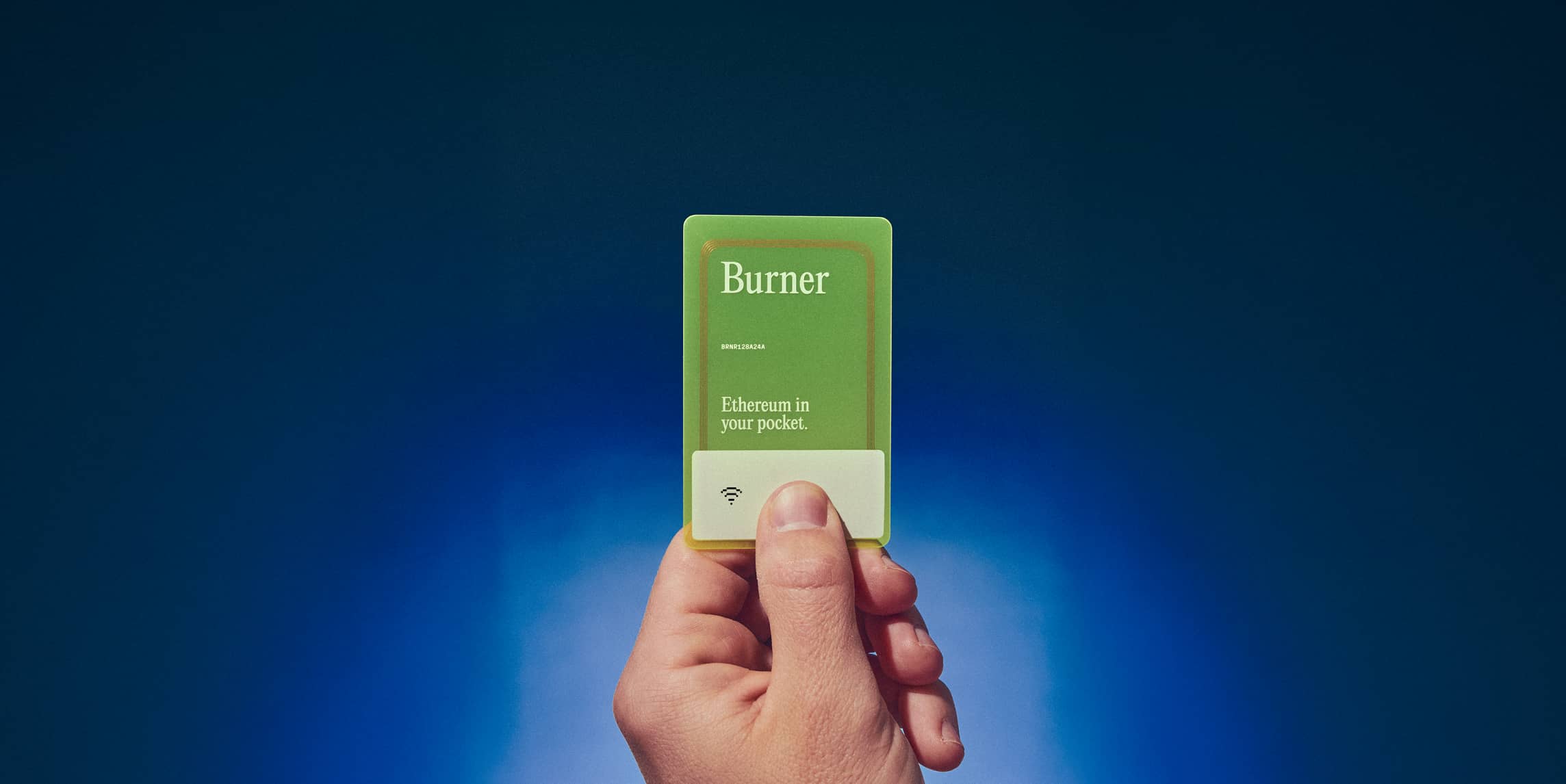
A Burner is a credit-card-sized hardware wallet. It uses the same secure-chip technology as Ledger and Trezor, with a non-extractable private key. You load it with stablecoins, or any other crypto on a supported network, then hand it over or mail it. To use it, the recipient taps the card against any phone and BurnerOS opens in the browser. There's nothing to install, no app store account, no exchange signup, and no seed phrase to protect, because the card itself is the wallet.
Mailing a funded Burner card is safe and simple. The funds are protected by a 6-digit PIN, and after 20 failed attempts the card permanently locks.
The card has its own blockchain address, so future transfers go straight to it. The first remittance requires postage; every one after that is a normal stablecoin transfer to the Burner card they already have. Burner Terminal is a point-of-sale device that lets merchants accept stablecoin payments; the customer pays by tapping their Burner card on it. As more local shops adopt it, your family can pay in person by tapping the same card you mailed, though merchant coverage is still limited.
Related: For more ways people use the card, including travel money and gifts, read 15 Real-Life Use Cases for Burner
For converting to cash, a Burner has the same options and the same limits as any other wallet. The difference a Burner makes is at the start: the setup burden falls on the sender, not the recipient.
Create a backup Burner before the card ever leaves your hands. If it's lost in the mail, the 6-digit PIN stops whoever finds it from spending the funds, so the money itself stays safe, but it also means the balance can't be recovered without the card. Duplicating the card first copies its funds onto a second Burner you keep, so a lost package never means lost money.
Check your local rules, too. Some postal carriers and countries restrict mailing cash or cash-like instruments across borders, and a preloaded card can fall under those rules. A quick look at your carrier's guidelines before you send avoids a seized or returned package.
Final Thoughts
On cost and speed, stablecoin remittances are well ahead of the traditional options, and the established players are moving onto the same rails.
What hasn't been solved by better rails is the person at the other end. Software wallets ask your family to become crypto users as the price of receiving money, and for a lot of families that price is higher than the fees ever were. Moving the setup burden to the sender, who already understands it, and handing the recipient a finished wallet they can tap with a phone, closes most of that gap.
Cheaper and faster only matter if your family can actually receive the money, without needing any technical know-how to do it.
FAQ: Stablecoin Remittances
❓ Can you send stablecoins internationally?
Yes. Blockchains don't have borders, so sending stablecoins to another country works the same as sending them domestically. They move wallet to wallet, settle in minutes, and cost a network fee of a few cents or less.
❓ Do you need ID to send stablecoins?
Not for the transfer itself, which moves wallet to wallet without an identity check. ID and KYC apply when you convert between dollars and stablecoins through an exchange, on the on-ramp or off-ramp, not when sending between wallets.
❓ Is it cheaper to transfer USDT or USDC?
The transfer cost depends on which blockchain you use. USDT and USDC cost the same to send on the same chain. The better question is what your recipient can use locally: USDT dominates peer-to-peer markets in many emerging economies, while USDC has wider support among US-based exchanges and services.
❓ Which countries accept stablecoins?
Adoption is strongest where local currencies are weakest. Venezuela, Argentina, Brazil, Nigeria, and the Philippines all have active stablecoin economies, with merchant acceptance and deep peer-to-peer markets. In dollarized economies like Ecuador, where the US dollar is already the official currency, a dollar stablecoin maps directly to the money people already use. In most other countries, stablecoins are easy to hold and convert but not yet spendable at the corner store.
❓ What happens if the card is lost in the mail?
The funds stay locked behind the card's 6-digit PIN, and the card shuts down permanently after 20 failed attempts, so whoever finds it can't get in. If you created a backup Burner before mailing, you can recover the balance to the backup card.
❓ Does the person receiving stablecoins need a bank account?
No, and that's a real advantage over bank wires. They need a way to hold the stablecoins, which can be a wallet app or a Burner card tapped against any phone. A bank account only becomes relevant if they want to convert to local currency through a bank rather than an exchange, P2P market, or cash pickup service.
❓ How does my family turn stablecoins into cash?
The main routes are local exchanges, peer-to-peer markets, and cash pickup services like MoneyGram's USDC withdrawals at participating locations. Options and fees vary a lot by country, so check what's available where your family lives before the first transfer. In high-inflation countries, many families skip the conversion and hold the dollars.
Get your Burner
What to read next
Back to articles
Coldcard's $116M Hack: Why One Entropy Source Isn't Enough
Every security feature on a hardware wallet protects the key after it exists. The recent Coldcard hack, roughly $116 million drained from more than 5,200 addresses, shows what happens when the number behind that key came from one source and the source was wrong.

Who Is Satoshi Nakamoto? The Suspects and the 2026 Hunt to Unmask Bitcoin's Creator
More than 17 years after Bitcoin's first block, no one has proven who Satoshi Nakamoto is. We go through the leading suspects, the competing answers from a 2026 documentary and the New York Times, and what Satoshi's untouched coins say about holding bitcoin yourself.
What is a Real-World Asset (RWA)? A Guide to RWAs on Base and How to Securely Store Them
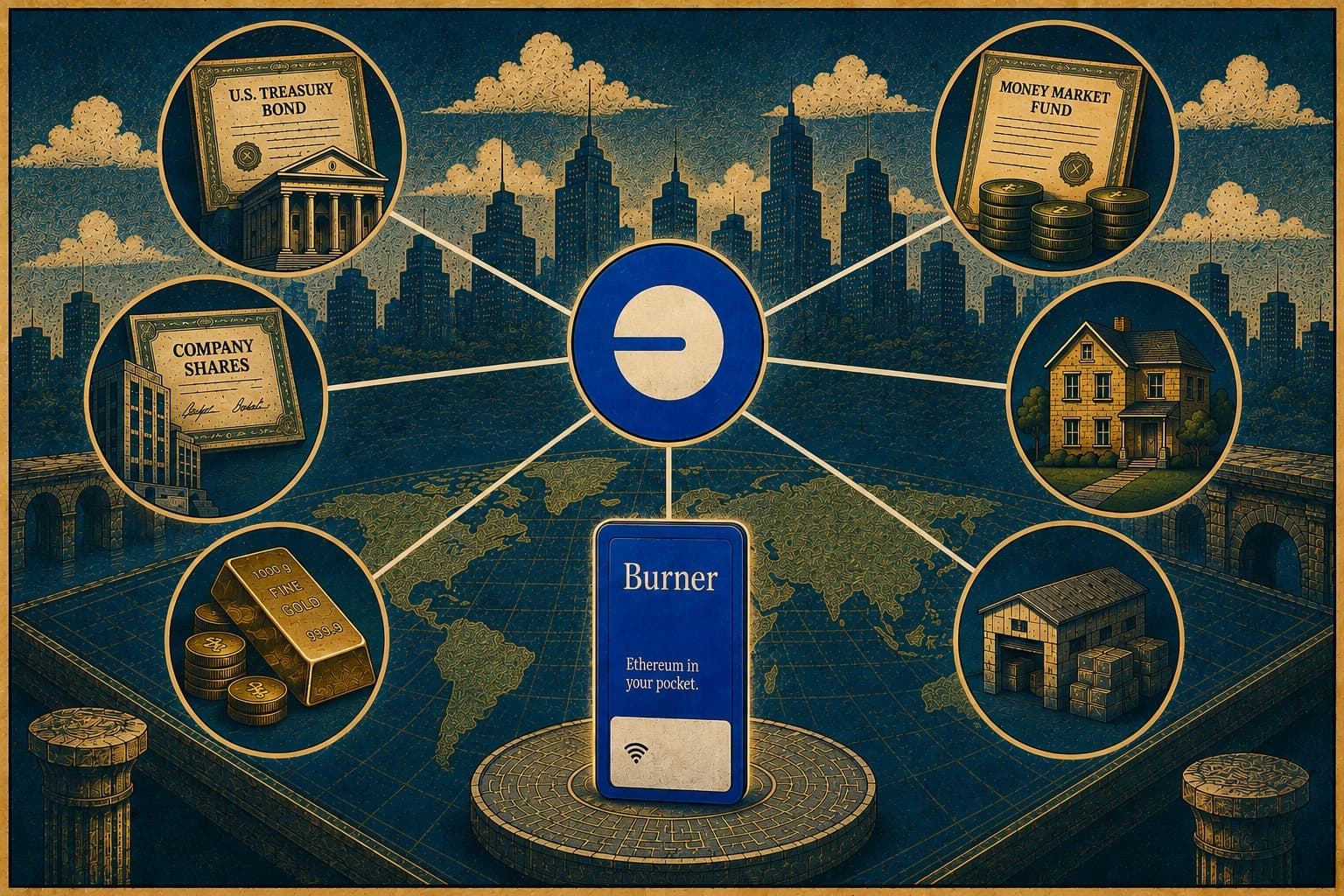
A real-world asset is something that exists off the blockchain, like a US Treasury bond, a money market fund, a bar of gold, or a share of stock, represented on-chain as a token. The token isn’t a new asset with value of its own. It’s a claim on the real one, recorded on a blockchain so it can be moved, split, and held the way you’d hold any cryptocurrency.