What is a Real-World Asset (RWA)? A Guide to RWAs on Base and How to Securely Store Them
Back to articles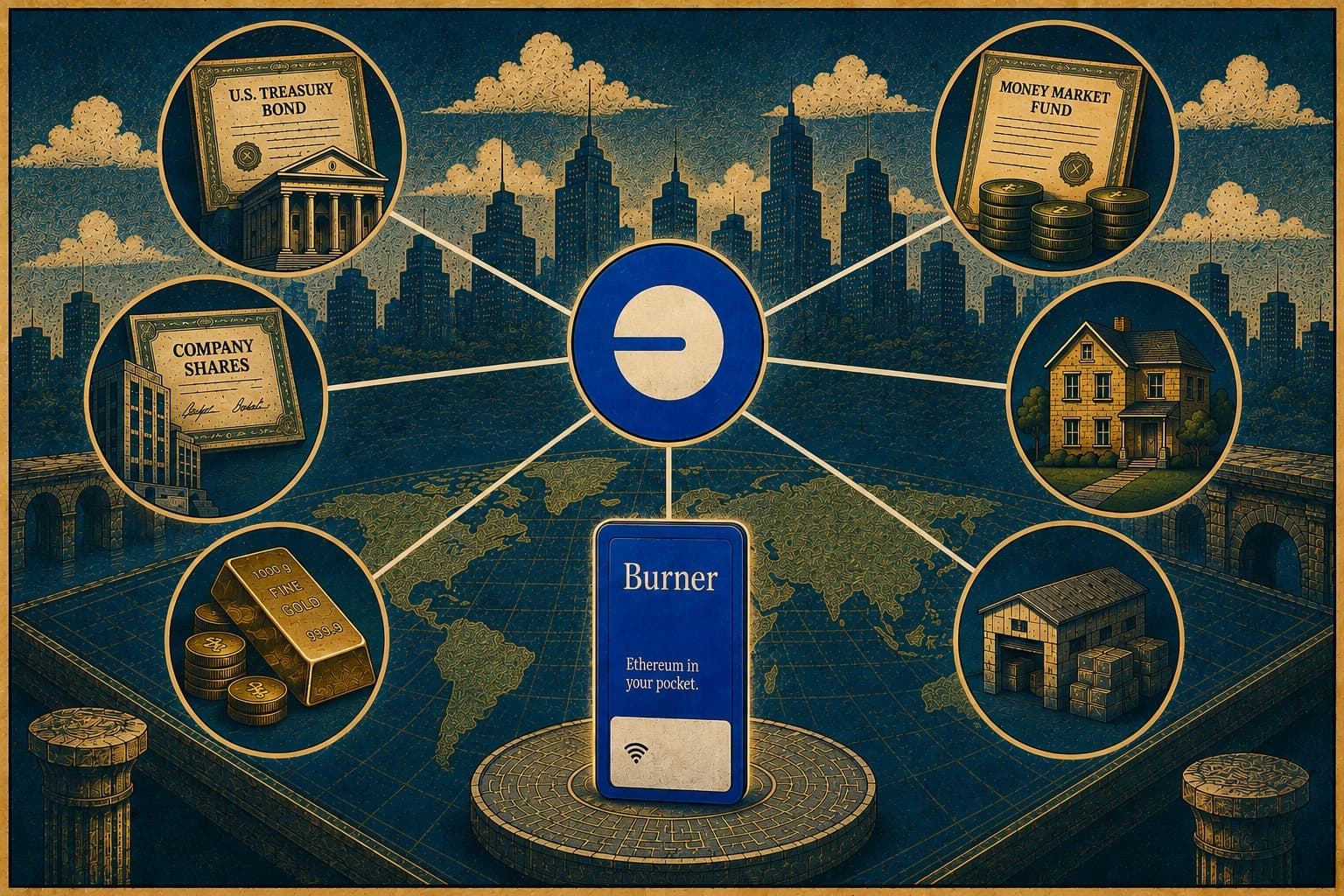
TL;DR
- Real-world assets are off-chain things like US Treasuries, money market funds, gold, and stocks, issued as tokens on a blockchain so they can be split, traded around the clock, and held like any crypto
- Base, Coinbase’s Ethereum Layer 2, has become a hub for credible RWAs, including Backed’s tokenized US Treasury ETF (bIB01), Franklin Templeton’s tokenized money market fund (BENJI), and USDC
- Tokenizing an asset takes three steps: structure the real asset off-chain, deploy a smart contract, and issue the token that represents a claim on it
- A RWA token is only as trustworthy as the issuer and custodian behind it, so the backing and the keys both matter
- Because these tokens hold real value, self-custody matters; Burner is an affordable, easy-to-use hardware wallet with native Base support, no seed phrase, and nothing to install, with the same security as more expensive hardware wallets
What Are Real-World Assets (RWA)?
A real-world asset is something that exists off the blockchain, like a US Treasury bond, a money market fund, a bar of gold, or a share of stock, represented on-chain as a token. The token isn’t a new asset with value of its own. It’s a claim on the real one, recorded on a blockchain so it can be moved, split, and held the way you’d hold any cryptocurrency.
What changes is the recording. A Treasury bond normally settles through banks and brokers during business hours. As a token, the same bond can move from one wallet to another in seconds, at any hour, and be divided into fractions a small investor can actually afford.
RWAs cover both tangible things, like gold and real estate, and intangible ones, like bonds, equities, fund shares, and private credit. What they share is a link between a token on-chain and something of value off-chain, with a real issuer responsible for honoring that link.
How Tokenization Works
Turning a real asset into a token follows three steps.
Take gold. Paxos holds physical gold in a vault and issues PAX Gold tokens, each redeemable for one fine troy ounce. The gold sits in storage; the tokens move on-chain. Buy one and you own an ounce without storing metal yourself.
The token is only as reliable as the structure behind it: if the asset isn’t genuinely held and audited, the token is worth nothing.
Why Base Has Become a Home for RWAs
Base is Coinbase’s Ethereum Layer 2, a network built on top of Ethereum to make transactions faster and cheaper while keeping Ethereum’s security. Fees run a fraction of Ethereum mainnet’s, and because Base is EVM-compatible, anything that works on Ethereum works on Base with the same wallet and the same address.
For asset issuers, settlement is cheap enough for small transactions, the developer tooling is familiar, and Base’s ties to Coinbase put it close to a large, regulated US user base. Reputable issuers have followed: Backed chose Base for the first tokenized security on the network, and Franklin Templeton, one of the oldest names in asset management, runs its tokenized fund there. Coinbase has leaned in directly with Coinbase Tokenize, institutional infrastructure for issuing and managing tokenized real-world assets, built on Base with onchain ownership held in self-custodial wallets.
Real-World Assets on Base
The RWA label covers a lot of low-quality projects, so it helps to look at names with real assets and real issuers behind them. A few that are live on Base:
| Asset | Issuer | What it represents | Type |
|---|---|---|---|
| bIB01 | Backed | Shares of a short-term US Treasury bond ETF | Tokenized treasuries |
| BENJI | Franklin Templeton | A US-registered government money market fund (FOBXX) | Tokenized fund |
| USDC | Circle | A fully reserved US dollar | Stablecoin |
bIB01 was the first tokenized security issued on Base, a way to hold short-dated government debt on-chain. BENJI is Franklin Templeton’s tokenized money market fund, where one token equals one share of the fund and yield accrues daily. And USDC is itself a real-world asset: each token is backed by a dollar or equivalent reserves, and it is one of the most widely used assets on Base.
These are different from “RWA protocol” tokens, the governance coins of tokenization platforms. Those carry the price risk of a startup rather than the value of a Treasury or a dollar, and the two are easy to confuse when both get filed under “RWA.”
Key point: A token is a claim, not the asset itself. Its value depends entirely on the issuer actually holding and honoring what it represents, so treat the issuer’s reputation as part of the asset.
The Risks and Limits
RWAs are not risk-free, and here are some of the risks worth understanding before you invest:
Issuer and custody risk. The token is a claim on an asset someone else holds. If the issuer fails or the asset isn’t really there, the token can lose its backing. This is why issuer reputation and independent audits matter.
Enforcement happens off-chain. Your on-chain token is backed by a legal structure in the real world. Getting the actual bond or gold if something goes wrong depends on that paperwork and the courts, not the blockchain.
Regulation is still forming. Rules for tokenized securities are being written now, and access is often restricted by region or gated behind eligibility checks. Some tokenized securities also limit transfers to approved wallets.
Smart-contract risk. The contract that issues and tracks a token can have bugs, and a flaw can be exploited.
Tokenizing something doesn’t make it liquid. Putting an asset on-chain makes it easier to move and settle, but a market still needs buyers and sellers on both sides. Treasuries and stablecoins trade actively, while tokenized real estate and niche assets can be hard to sell quickly. A token with no real market is still illiquid, just with an on-chain wrapper.
None of this makes RWAs unsafe by default. It means the quality of the issuer and the structure is what matters most.
How to Store RWA Tokens on Base Securely
Once you hold a RWA on Base, it lives in a wallet like any other token. There are two ways to hold it, and the difference matters more as the value goes up.
The first is custodial: an exchange or app holds the token for you, and you trust them to keep it and hand it back. It’s convenient, but the keys aren’t yours, so the account can be frozen and the company’s problems become yours.
The second is self-custody: you hold the keys, and the token sits in a wallet only you control. That removes the middleman, but it puts the responsibility on you, and with most self-custody wallets that means protecting a seed phrase, a string of words that can be lost or stolen.
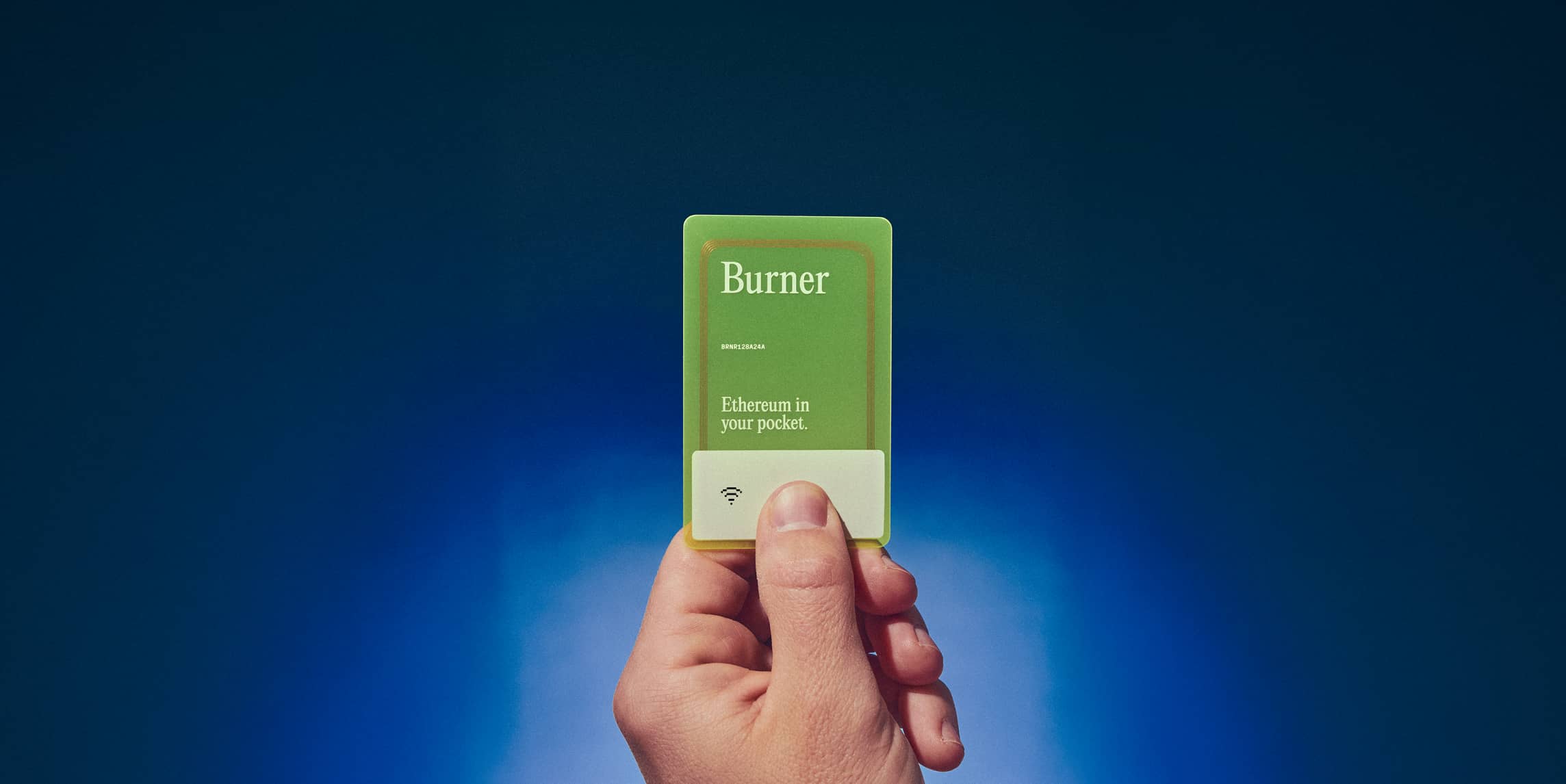
A hardware wallet keeps the keys on a physical device, so they never touch an internet-connected phone or computer. Burner is one such hardware wallet, a credit-card-sized device with a non-extractable private key on a secure chip, the same secure-chip technology used by Ledger and Trezor, with no seed phrase and no app to install. You tap the card to your phone and your wallet opens in the browser.
Burner supports Base natively, so Base is one of its default networks and you use the same address across Ethereum and Base. A standard Base RWA token, like USDC or a tokenized Treasury, can be held directly on the card in your own custody, and BurnerOS can swap or bridge tokens onto Base from inside the wallet. If you’re moving assets over for the first time, we walk through it in how to bridge Ethereum to Base. For an asset that represents real money, holding the keys yourself means no third party can freeze or lose it.
Final Thoughts
The appeal of a tokenized real-world asset is convenience: a Treasury or a fund share that used to settle through banks during business hours can move in seconds, trade at any hour, and divide into fractions a smaller investor can actually afford. Those benefits come with real risks, which mostly reduce to whether the issuer genuinely holds what the token represents and whether the keys stay in safe hands. Once you’ve chosen assets from issuers you trust, holding them in your own custody, on a wallet whose keys never leave your hands, is how you keep what you bought.
Disclaimer: This article is educational and not financial, investment, tax, or legal advice. Mentions of specific tokens, issuers, or platforms are not endorsements. Do your own research before buying or holding any real-world asset.
FAQ: Real-World Assets on Base
❓ What’s an example of a real-world asset on Base?
Backed’s bIB01, a token that tracks a short-term US Treasury bond ETF, was the first tokenized security issued on Base. Other examples include Franklin Templeton’s BENJI money market fund and USDC, the fully reserved dollar stablecoin.
❓ Which real-world asset is the most tokenized so far?
Stablecoins like USDC and USDT are by far the largest category, since each token is a tokenized dollar. After stablecoins, tokenized US Treasuries are the fastest-growing category, led by funds from issuers like Franklin Templeton.
❓ What is RWA in a crypto wallet?
It means holding a token that represents a real-world asset, such as a tokenized Treasury, fund share, or stablecoin, in your wallet. On Base these are standard tokens, so any Base-compatible wallet, including a Burner hardware wallet, can hold them.
❓ Can I buy RWA on Coinbase?
Coinbase offers some tokenized and real-world-asset products, and through Coinbase Tokenize it is building infrastructure to issue more of them on Base. Base, its Layer 2, also hosts many RWAs from third parties like Backed and Franklin Templeton. Availability depends on your region and the specific product’s eligibility rules.
❓ Are RWA tokens a good investment?
This isn’t financial advice. A token backed by a Treasury or a money market fund carries the risk of that underlying asset plus issuer and smart-contract risk. Be careful to separate these from “RWA protocol” governance tokens, which are startup bets and behave very differently. Research the issuer and what backs the token before buying.
❓ How do I store real-world asset tokens on Base safely?
Use self-custody so you hold the keys. A hardware wallet keeps those keys on a physical device. Burner supports Base natively, with no seed phrase, nothing to install, and the same security as more expensive hardware wallets, so you can keep Base RWA tokens in your own custody.
Get your Burner
What to read next
Back to articles
Coldcard's $116M Hack: Why One Entropy Source Isn't Enough
Every security feature on a hardware wallet protects the key after it exists. The recent Coldcard hack, roughly $116 million drained from more than 5,200 addresses, shows what happens when the number behind that key came from one source and the source was wrong.

Who Is Satoshi Nakamoto? The Suspects and the 2026 Hunt to Unmask Bitcoin's Creator
More than 17 years after Bitcoin's first block, no one has proven who Satoshi Nakamoto is. We go through the leading suspects, the competing answers from a 2026 documentary and the New York Times, and what Satoshi's untouched coins say about holding bitcoin yourself.