Who Is Satoshi Nakamoto? The Suspects and the 2026 Hunt to Unmask Bitcoin's Creator
Back to articles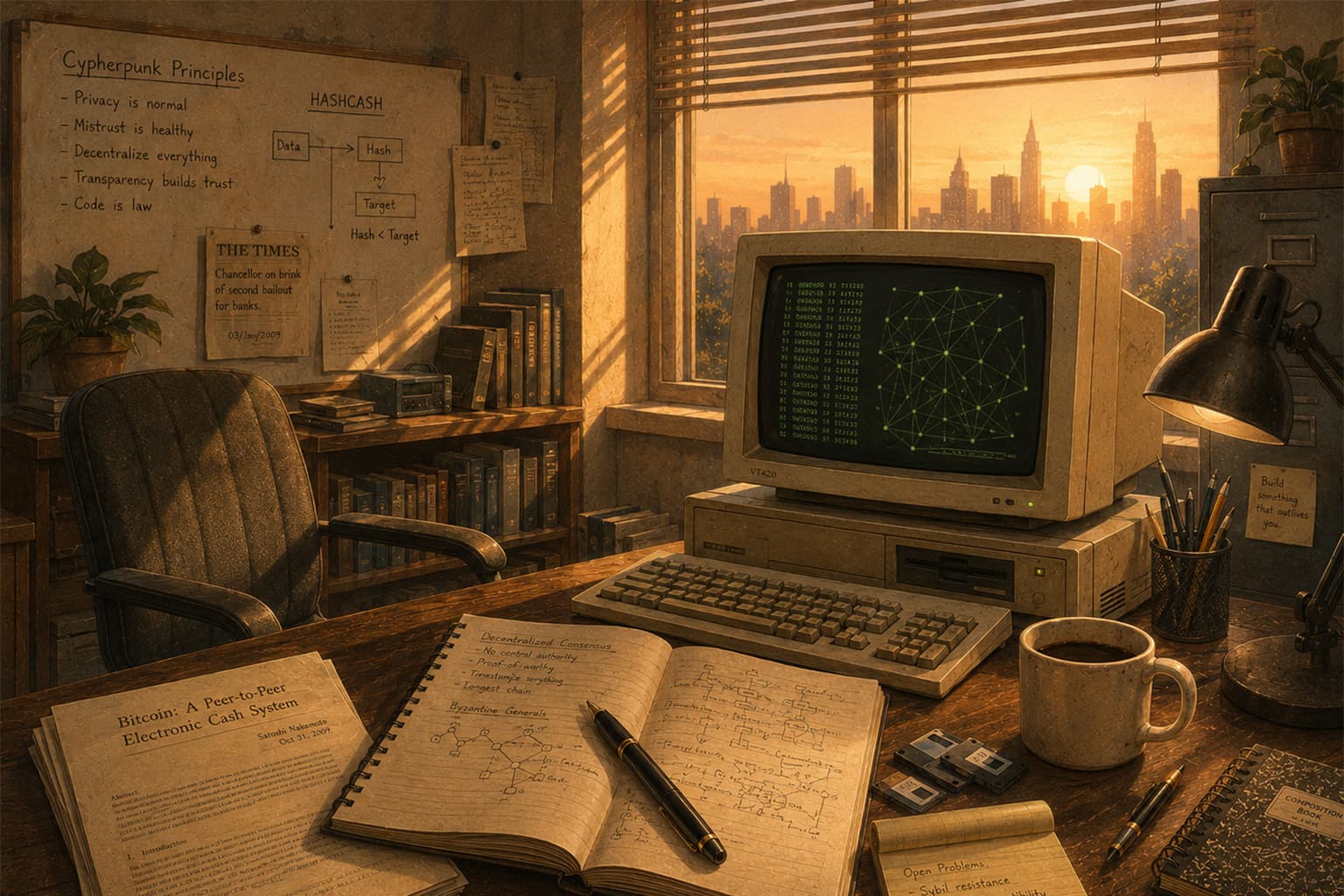
TL;DR
- Satoshi Nakamoto is the pseudonym of whoever created Bitcoin: published the whitepaper in 2008, mined the first block in January 2009, and went quiet in 2011.
- The name is almost certainly not a real Japanese person. British spelling and posting hours point to someone in the UK or nearby.
- The leading suspects are Hal Finney, Nick Szabo, Adam Back, Len Sassaman, Dorian Nakamoto, and Craig Wright, whom a UK court ruled in 2024 is not Satoshi.
- The mystery came back in 2026: the documentary Finding Satoshi points to Hal Finney and Len Sassaman, while a New York Times investigation points to Adam Back, who has denied it.
- Satoshi's estimated 1.1 million bitcoin haven't moved since 2010, the longest-running example of Bitcoin self-custody there is.
More than 17 years after Bitcoin's first block, the person who invented a now multi-trillion-dollar form of money is still unknown. We know the pseudonym, Satoshi Nakamoto, roughly when the work happened, and how much bitcoin the creator left behind. We just don't know who he, she, or they were.
For years the question mostly faded out. Then in 2026 it was suddenly everywhere again, after a documentary and a New York Times investigation each claimed to have cracked it, and pointed at different people. This post lays out what's actually known, who the suspects are, and what Satoshi's untouched coins can teach you about holding bitcoin yourself.
What We Actually Know About Satoshi
Someone using the name Satoshi Nakamoto registered the bitcoin.org domain in August 2008, then published a nine-page paper titled "Bitcoin: A Peer-to-Peer Electronic Cash System" on October 31, 2008, and announced it the same day on a cryptography mailing list. "I've been working on a new electronic cash system that's fully peer-to-peer, with no trusted third party," he wrote in the opening line. The paper solved a problem that had blocked digital cash for decades: how to stop someone from spending the same money twice without a bank in the middle to keep score.
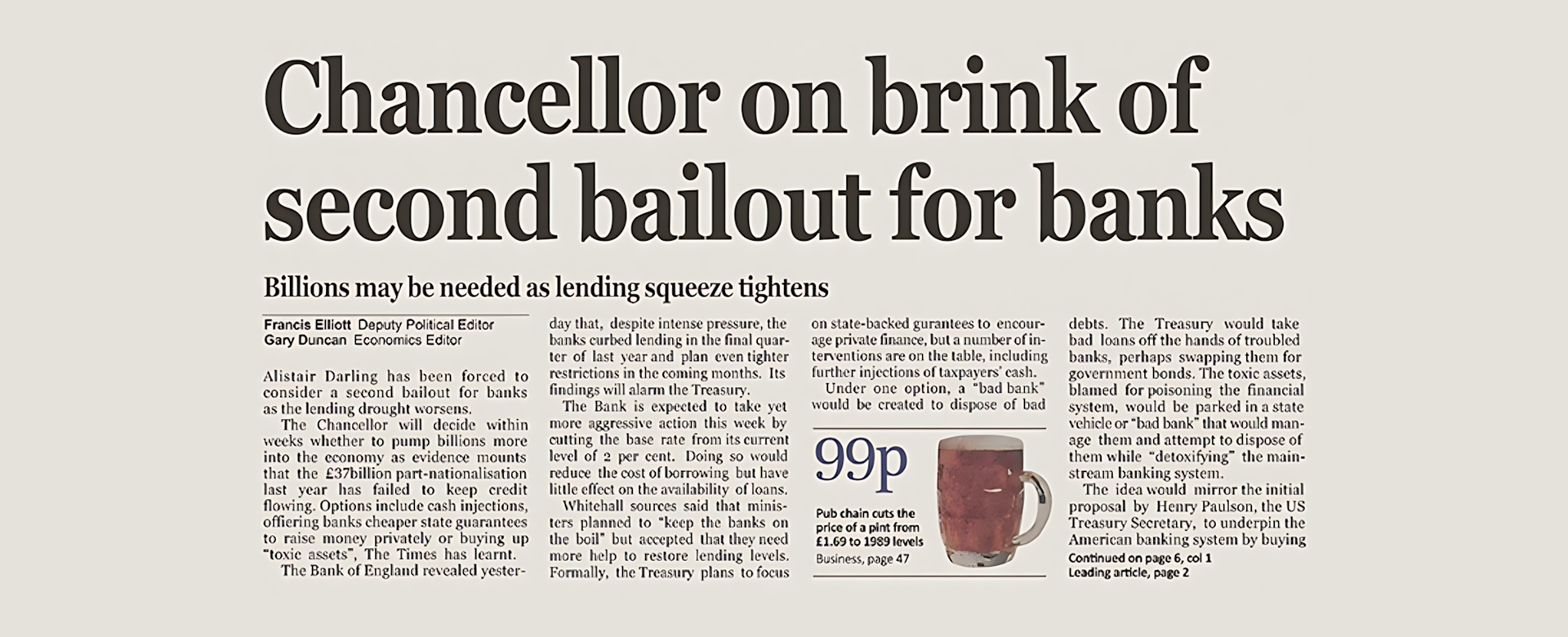
On January 3, 2009, Satoshi mined Bitcoin's first block, known as the genesis block, and embedded a line of text in it:
That headline had run that morning in the British print edition of The Times, and embedding it did two things at once. One, it stamped the block with a date no one could forge, proving the chain couldn't have been built any earlier. Two, in a single line, it said why Bitcoin existed at all. The world was deep in the 2008 financial crisis: banks that had gambled and lost were being propped up with taxpayer money, while the ordinary people who trusted them absorbed the damage. Satoshi's answer was a different kind of money, one that no bank could conjure out of thin air, no government could quietly debase, and no authority could freeze or seize, run instead by a network that no single party controls. The genesis message turned that grievance into the permanent first entry in Bitcoin's ledger.
For about two years, Satoshi developed the software alongside a small group of early contributors, mostly over email and a forum called Bitcointalk. Then the messages stopped. The last widely accepted contact came in 2011, in a note telling another developer he had "moved on to other things." Satoshi has been silent since, aside from a couple of disputed messages.
Satoshi was almost certainly not Japanese: the writing mixes British spellings like "colour" and "optimise" with the occasional "bloody," and the posting times suggest someone living in a European or UK time zone. Analysis of the early blockchain credits Satoshi with an estimated 1.1 million bitcoin, around 5% of the 21 million that will ever exist, worth roughly $70 billion in early 2026. None of it has moved since 2010.
The Leading Suspects
Over the years, journalists and internet sleuths have floated more than 100 names. A handful keep coming back because the circumstantial case for them is genuinely interesting. None has ever been proven, because proof would require something only Satoshi can do: sign a message with the keys to those early coins.
| Suspect | The case for | The case against | Status |
|---|---|---|---|
| Hal Finney | Received the first bitcoin transaction; lived near a man named Dorian Nakamoto; a strong stylometric near-match | Denied it; was photographed running a race while Satoshi was emailing in 2009; died in 2014 | Leading theory |
| Adam Back | Invented Hashcash, cited in the whitepaper; British cypherpunk; described nearly every part of Bitcoin in 1990s posts | Denied it repeatedly; writing analysis came back inconclusive; no coins ever moved to confirm it | 2026 NYT focus |
| Nick Szabo | Designed "bit gold," a direct conceptual precursor; long a top pick on many lists | Flatly denied it; a recent technical debate suggested gaps in his Bitcoin knowledge | Long-time pick |
| Len Sassaman | Respected cypherpunk cryptographer; a tribute to him is embedded in the blockchain | No direct technical link; died in 2011, before a 2015 message attributed to Satoshi | Documentary theory |
| Dorian Nakamoto | His birth name really is Satoshi Nakamoto; a physics and engineering background | No technical link to Bitcoin; denied it; a 2014 magazine story was widely discredited | Debunked |
| Craig Wright | Publicly and repeatedly claimed to be Satoshi for years | A UK court ruled in 2024 that he is not Satoshi and that his evidence was forged | Ruled out in court |
The one name that's been formally settled is Craig Wright's, and in the negative. After years of claiming to be Bitcoin's creator, Wright was taken to a London court by an industry group, and in 2024 the judge ruled that he is not Satoshi, that he did not write the whitepaper, and that key documents he submitted were forgeries. He was later found in contempt for continuing to press the claim.
Why the Question Came Back in 2026
Two high-profile investigations put the question back in the headlines, and they reached different conclusions.
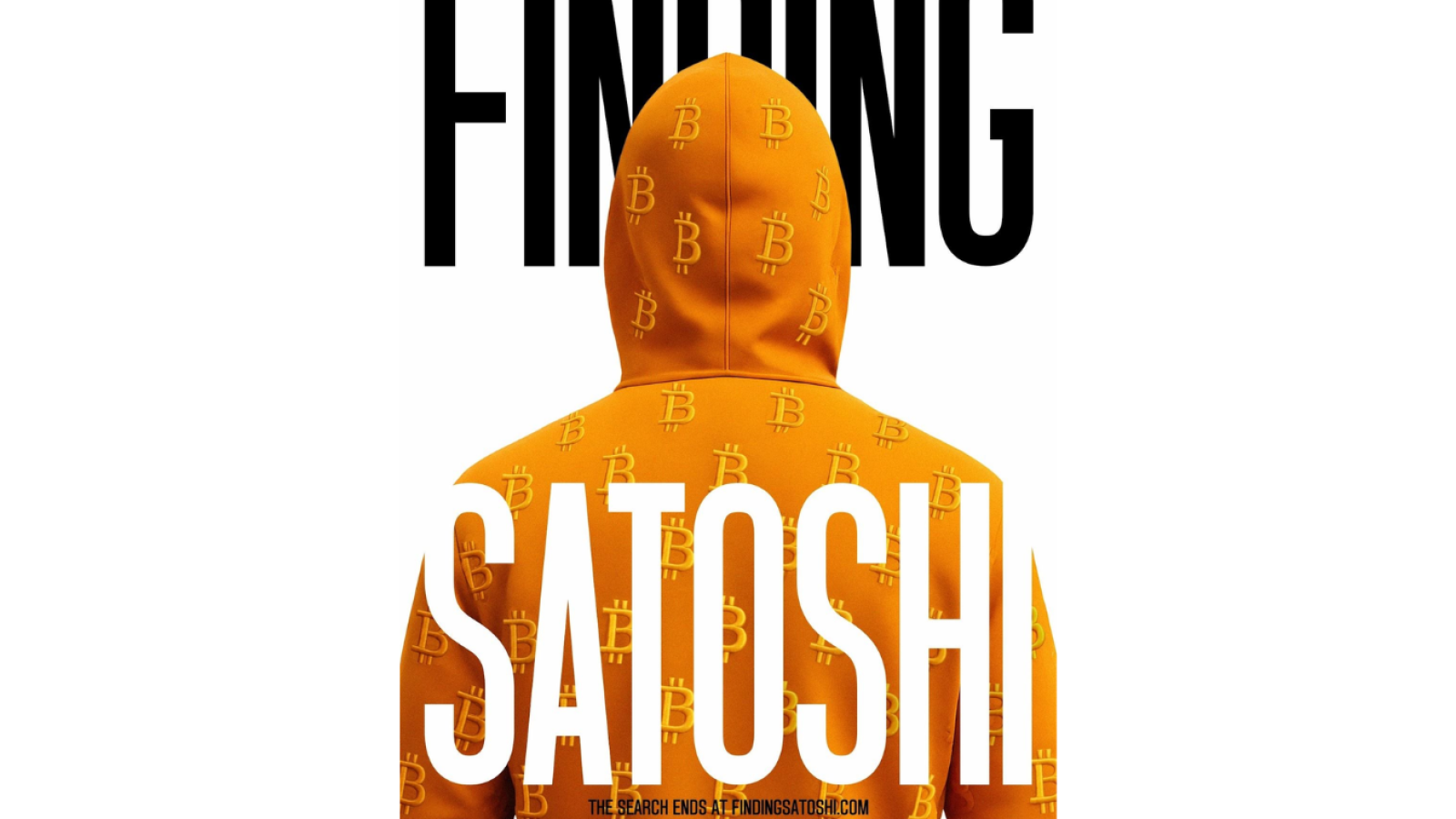
The documentary Finding Satoshi, released in April 2026, followed a four-year investigation by author William Cohan and private investigator Tyler Maroney. It builds a case that Bitcoin was the work of Hal Finney and Len Sassaman. The film drew an unusual endorsement from Coinbase CEO Brian Armstrong, who called it "the most thoughtful take on this subject I've seen" and said he suspected it had reached the right answer.
Weeks earlier, in April 2026, The New York Times published a different verdict. Investigative reporter John Carreyrou spent a year reading tens of thousands of old cypherpunk mailing-list posts and concluded that the likeliest Satoshi is Adam Back, the British cryptographer who invented Hashcash. Back, whose Hashcash work is cited in the Bitcoin whitepaper, had laid out nearly every component of Bitcoin in posts written a decade before it launched, shared a long list of unusual writing habits with Satoshi, and went quiet on the lists during the exact window Satoshi was active. Back has denied being Satoshi many times, the writing analysis came back inconclusive, and he has never had to prove anything, because the coins have never moved.
Both theories have holes. The Finney and Sassaman case has to account for the fact that both men were dead before a 2015 message attributed to Satoshi appeared, and that Finney was running a timed 10-mile race while Satoshi was emailing a developer in 2009. The case for Adam Back is mostly a set of coincidences, with no confession and no signature from Satoshi's keys to back it up. A 2024 HBO documentary that pointed to a different developer told a believable story too, but no one could prove it.
The Coins That Never Moved
Whoever Satoshi is, they've held roughly 1.1 million bitcoin since 2010 without ever moving a coin from the main early holdings, and because those addresses are watched closely, any movement would be spotted right away. That the balance has sat untouched for more than a decade, through every bull run and crash, is part of why the mystery endures.
You can hold bitcoin the same basic way Satoshi did, whatever the amount, by keeping the keys to your own coins offline and under your own control.
How you hold those keys runs along a spectrum, from letting a company keep them for you to holding them entirely yourself.
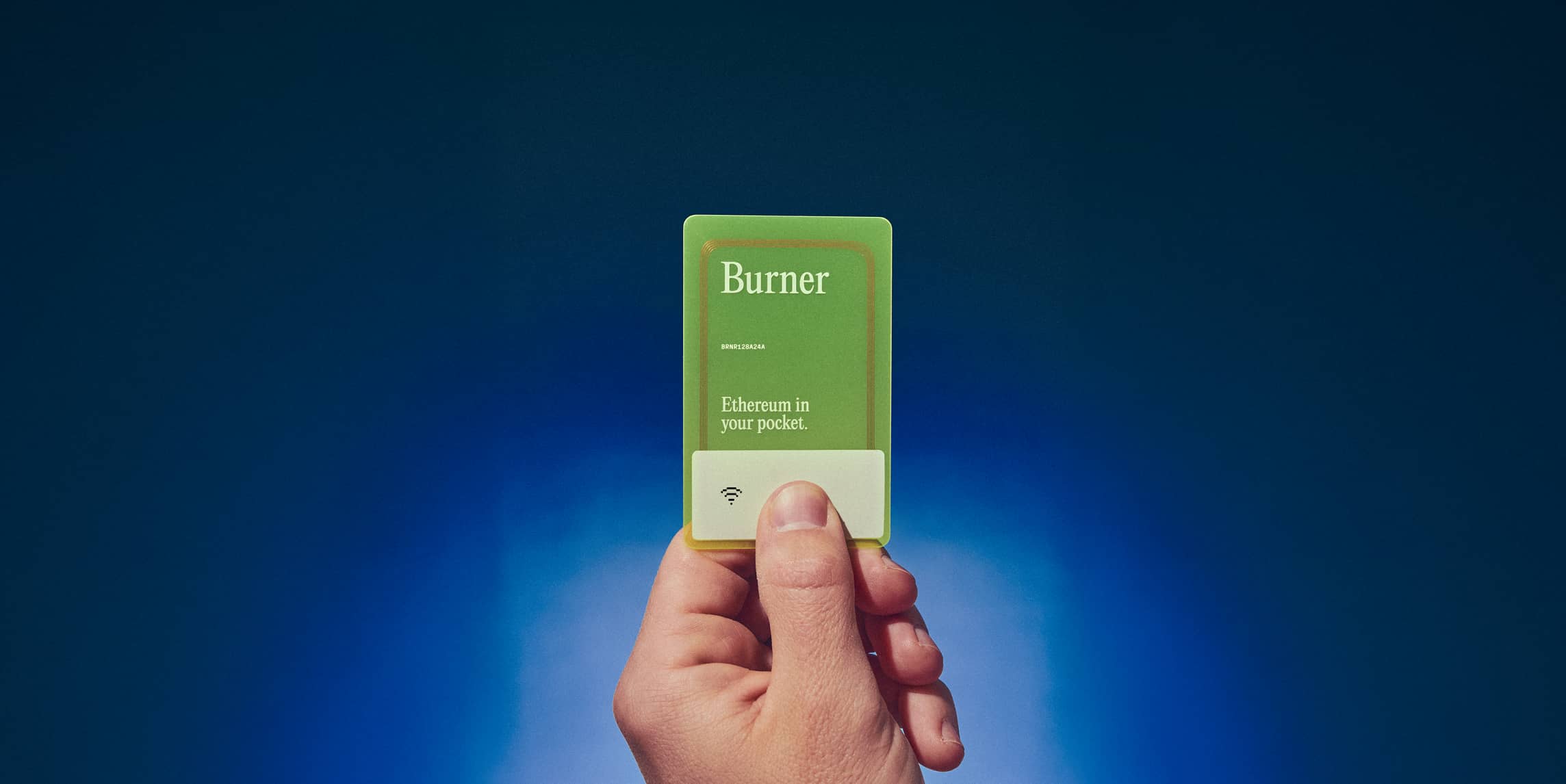
Burner Bitcoin is built to be the simplest way to hold your bitcoin in self-custody. It's a credit-card-sized hardware wallet that slips into your wallet using the same secure-chip technology used by more expensive hardware wallets like Ledger and Trezor. You tap it to the back of any NFC-enabled device to open your wallet in the browser, with no software to install and no seed phrase to lose, and it's protected by a 6-digit PIN. It's also one of the most affordable hardware wallets around, and the easiest way to move bitcoin off an exchange and into storage you control, or to gift it or onboard someone new to Bitcoin.

Related: New to the idea of a card that holds your crypto? Read What Is a Burner Card for how it works.
What's Next for Bitcoin
While the question of who Satoshi is makes the headlines, the Bitcoin community spends most of its energy on what's ahead, and right now that means quantum computing. Bitcoin's security rests on cryptography that today's computers can't break, but a sufficiently powerful quantum computer eventually could, at least for coins whose public keys are already visible on the blockchain. By one Deloitte estimate, about a quarter of all bitcoin sit in addresses with that kind of exposure. Satoshi's early coins are among the most exposed of all, since the original mining rewards published their public keys directly.
A 2024 survey of 32 quantum experts put the odds of a quantum computer breaking the encryption behind today's digital signatures at roughly 19 to 34 percent within a decade, rising toward 50 percent around the 15-to-20-year mark. The most aggressive credible forecasts point to around 2030, the same year U.S. standards bodies start retiring the at-risk algorithms.
In 2025, Google researchers sharply lowered the bar, estimating that breaking the kind of public-key cryptography Bitcoin relies on would take far fewer qubits than the field assumed only a few years earlier, though still far more than today's chips, which hold mere hundreds, can muster. What's clear is that developers aren't waiting. There are active proposals to add quantum-resistant signatures to Bitcoin, and a real debate about how to handle vulnerable coins, with some arguing for an optional upgrade path and others for freezing exposed funds. Fittingly, Adam Back is one of the louder voices in it, pushing for optional upgrades over a forced freeze.
Final Thoughts
After 17 years, two documentaries, a court case, and a year-long newspaper investigation, no one has proven who Satoshi is. The strongest cases point to a few cypherpunks, with Adam Back and Hal Finney named most often, but none has been confirmed, and Satoshi has never come forward to settle it.
That's less of a problem than it sounds. Bitcoin was built so it wouldn't depend on any single person, so not knowing who made it doesn't change how it works. The part worth copying is how Satoshi's coins have been held. The keys were made by their owner, kept offline, and never handed to anyone else, and you can hold your own bitcoin the same way no matter how much you have.
FAQ: Satoshi Nakamoto
❓ Is Satoshi Nakamoto alive?
No one knows. Satoshi stopped posting in 2011 and hasn't been reliably heard from since. Because the identity was always anonymous, there's no way to confirm whether the person or people behind the name are still living. The coins sitting untouched since 2010 are consistent with someone who has either walked away, lost access, or died.
❓ How many bitcoin does Satoshi Nakamoto own?
Analysis of the early blockchain estimates Satoshi mined around 1.1 million bitcoin, though estimates range from roughly 750,000 to 1.1 million. That's close to 5% of all the bitcoin that will ever exist, worth tens of billions of dollars. The holdings have never moved, which is part of why the figure is an estimate rather than a confirmed number.
❓ What would happen if Satoshi's bitcoin ever moved?
It would be one of the most-watched events in crypto. Those addresses are monitored constantly, so any movement would be spotted immediately and would likely trigger sharp price volatility and a wave of speculation about whether Satoshi had returned. The long silence is exactly why a single transaction would carry so much weight.
❓ What is the Finding Satoshi documentary about?
It's a 2026 film following a four-year investigation by author William Cohan and a private investigator into Bitcoin's origins. It argues that the work behind Satoshi Nakamoto was done by Hal Finney and Len Sassaman. Coinbase CEO Brian Armstrong publicly praised the film and said he suspected it reached the right answer.
❓ Did Adam Back admit to being Satoshi Nakamoto?
No. A 2026 New York Times investigation made a detailed circumstantial case that Adam Back is the likeliest candidate, citing his Hashcash invention, his 1990s writings, and shared writing quirks. Back has denied being Satoshi many times, including in response to that reporting, and no proof has ever surfaced.
❓ Does anyone, like the FBI, actually know who Satoshi is?
There's no evidence that any government agency has confirmed Satoshi's identity. Plenty of journalists, researchers, and agencies have looked, but the only definitive proof would be a cryptographic signature from Satoshi's original keys, which has never appeared. Until that happens, every answer is informed speculation.
❓ Could a quantum computer steal Satoshi's bitcoin?
It's a real long-term concern, not a present-day one. Satoshi's earliest coins sit in addresses that expose their public keys, which a powerful enough quantum computer could one day target. No such machine exists yet, and Bitcoin developers are working on quantum-resistant upgrades. We'll cover the quantum question in depth in a future article.
❓ Do I need to be anonymous like Satoshi to hold bitcoin safely?
No. Satoshi's anonymity protected a person; it isn't what keeps the bitcoin safe. What protects the coins is self-custody: keys generated and held offline, under your own control. You can get the same setup with a hardware wallet, including a card-format one like Burner Bitcoin, without hiding your identity.
Get your Burner
What to read next
Back to articles
Coldcard's $116M Hack: Why One Entropy Source Isn't Enough
Every security feature on a hardware wallet protects the key after it exists. The recent Coldcard hack, roughly $116 million drained from more than 5,200 addresses, shows what happens when the number behind that key came from one source and the source was wrong.
What is a Real-World Asset (RWA)? A Guide to RWAs on Base and How to Securely Store Them
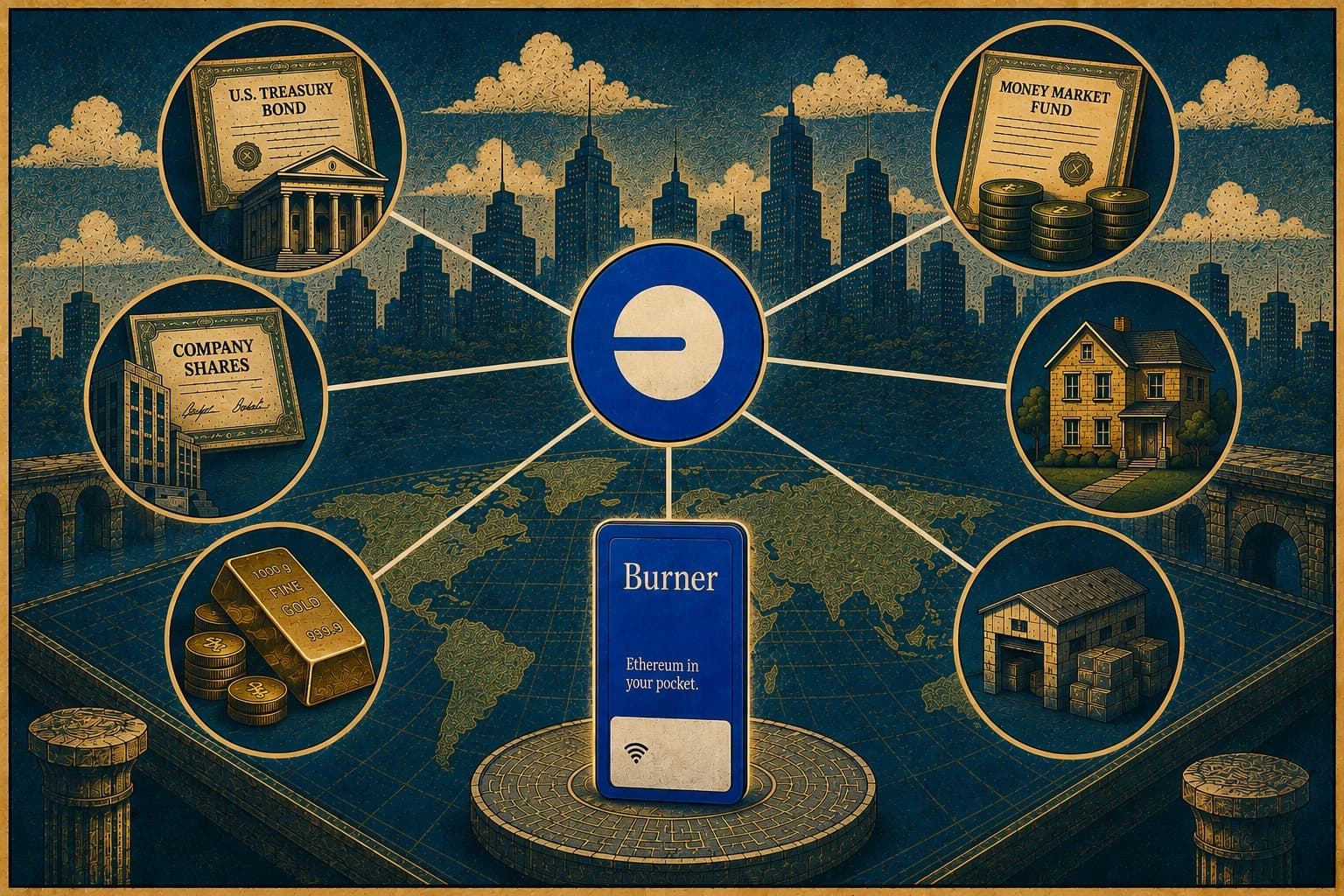
A real-world asset is something that exists off the blockchain, like a US Treasury bond, a money market fund, a bar of gold, or a share of stock, represented on-chain as a token. The token isn’t a new asset with value of its own. It’s a claim on the real one, recorded on a blockchain so it can be moved, split, and held the way you’d hold any cryptocurrency.