High-Risk Merchant Accounts: Why You're Paying 10% Processing Fees
Back to articles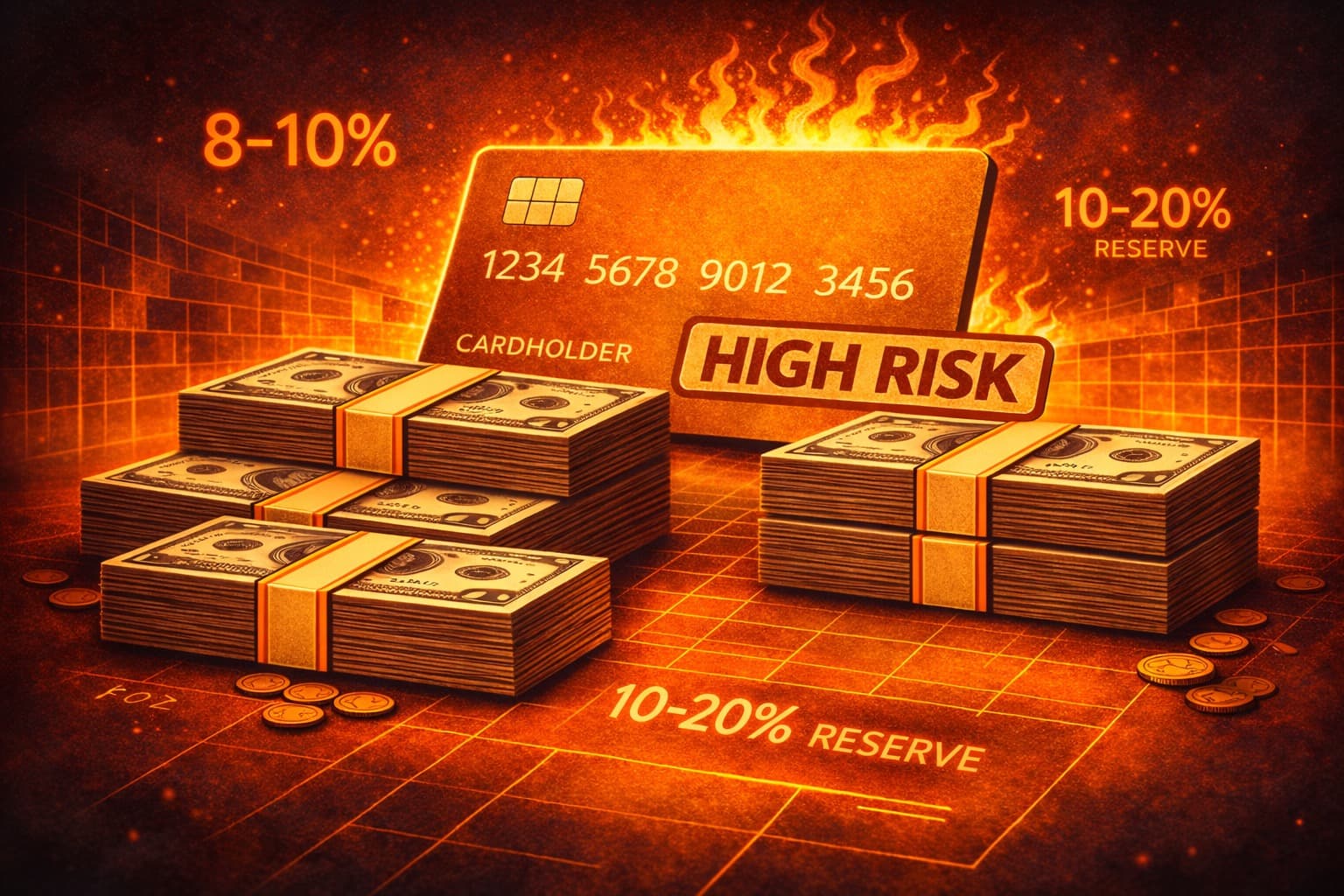
TL;DR
Card networks categorize industries like cannabis, vape, CBD, nutraceuticals, and adult content as high-risk regardless of your actual business practices.
- High-risk merchants pay 8-10% in processing fees, compared to 2.5-3.5% for standard merchants.
- High-risk businesses face rolling reserves (10-20% of revenue held for 180+ days), account freezes, and sudden terminations.
- Payment processors charge more because they can. Your options are limited and they know it.
- Stablecoins eliminate industry-based penalties. No chargebacks. No account freezes for operating in a high-risk category.
- For businesses that traditional processors won't serve or charge extreme fees, stablecoins offer a fundamentally different payment rail.
- Burner Terminal accepts stablecoin payments with instant settlement and no industry-based surcharges.
Most small businesses struggle with credit card fees. Even at 2.5-3.5%, processing costs eat into already thin margins. But if your business operates in cannabis, CBD, vape products, adult content, nutraceuticals, subscription services, travel booking, or any other category card networks flag as "high-risk," you're at an even greater disadvantage. The fees are higher. The restrictions are tighter. The risk of sudden account termination is constant. And you're not high-risk because of what you do. You're high-risk because of how card networks categorize your industry.
This post breaks down why high-risk merchant processing is so expensive, why stablecoins solve problems that traditional payment rails can't, and how Burner Terminal gives high-risk businesses a payment option that actually works in their favor. Whether you're looking for a high-risk merchant account with instant approval or exploring alternatives to traditional high-risk business credit card processing, understanding why these fees exist is the first step toward finding better options.
How You End Up in the High-Risk Category
Card networks and payment processors categorize merchants as high-risk based on industry, not individual business practices. It doesn't matter if you run a spotless operation with zero chargebacks and perfect compliance. If you're in the wrong industry, you're high-risk.
Common high-risk categories include:
Legal in many states, federally complicated, and most banks won't touch it. Even CBD products with zero THC face processing challenges.
Regulated, age-restricted, and frequently flagged for high chargeback rates whether your business has them or not.
Instant high-risk categorization across the board.
Anything making health claims gets flagged. Subscription models make it worse.
High ticket prices and advance payments create chargeback risk even for legitimate businesses.
Recurring billing increases chargeback rates. Doesn't matter if you have great retention.
Legal businesses selling legal products still get categorized as high-risk.
Exchanges, NFT marketplaces, and crypto services often can't get merchant accounts at all.
Once you're categorized as high-risk, the economics of accepting payments change dramatically, and there's no room for negotiation.
What High-Risk Processing Actually Costs
Standard merchants pay 2.5-3.5% in processing fees. High-risk merchants pay more. Often a lot more.
- Processing fees of 8-10% or higher. Some high-risk processors charge double-digit percentages on every transaction. On a $100 sale, you're giving up $8 to $10 just to accept payment.
- Flat per-transaction fees. Many high-risk processors add $0.30 to $0.50 per transaction on top of percentage-based fees. For small transactions, this makes margins impossible.
- Rolling reserves. Processors often hold 10-20% of your revenue for 180 days or longer. This destroys cash flow and forces you to operate with restricted capital.
- Monthly minimums and setup fees. Many high-risk processors charge $500+ per month in minimums plus upfront setup fees of $1,000 or more.
- Chargeback fees of $25-100 per incident. Even if you win the dispute, you pay the fee. High-risk merchants often face elevated chargeback thresholds, meaning a few disputes can trigger account review or termination.
- Account freezes and sudden terminations. High-risk accounts get shut down with little warning. Your funds get frozen, you can't process payments, and getting your reserves back can take months.
Add it all together and high-risk processing can consume 10-15% of revenue when you factor in fees, reserves, and operational disruptions. For businesses with thin margins, this makes profitability nearly impossible. For businesses with healthy margins, it's a massive drag on growth.

Why the System Works This Way
Card networks flag high-risk industries because of chargeback rates, regulatory complexity, and reputational concerns. Some of these concerns are legitimate. Industries with high return rates or customer disputes do create more chargebacks. Industries with regulatory scrutiny do create compliance costs for processors.
But high-risk categorization prioritizes industry over performance. Your actual chargeback rate and compliance record matter less than your industry code. A cannabis dispensary with perfect compliance pays far more than a standard retail business with constant disputes. A subscription service with high retention gets charged like one with constant chargebacks.
Payment processors charge high-risk merchants more because they can. Your options are limited. Most processors won't serve you at all. If you've had an account terminated, you're likely on the MATCH list (Member Alert to Control High-Risk Merchants), which makes getting approved by another processor nearly impossible. The ones who will work with you know you're desperate and price accordingly. This isn't a free market with competitive pricing. It's a constrained market where processors extract maximum value from businesses that have nowhere else to go.
How Stablecoins Bypass the High-Risk System
Stablecoins bypass the entire high-risk categorization system because they don't route through card networks or traditional payment processors.
When a customer pays you with a stablecoin, there's no Visa, no Mastercard, no acquiring bank, and no processor evaluating your industry risk. The payment moves directly from the customer's wallet to yours over a blockchain network.
For a deeper look at how stablecoins compare to traditional card payments, see our post on why stablecoins beat card payments Here, we'll focus on what this means specifically for high-risk merchants.
This eliminates most of the problems high-risk merchants face:
- No chargebacks. Stablecoin payments can't be reversed. For high-risk merchants who deal with elevated chargeback rates or accusations of elevated rates, this is huge.
- No account freezes or reserves. There's no processor holding your money for 180 days. You receive funds and they're yours to use.
- No termination based on industry alone. Legal businesses in high-risk categories won't get shut down simply for what they sell.
- No arbitrary processor restrictions. Card processors add their own rules beyond what's legally required. If you can legally sell it, you can accept payment for it.
For high-risk merchants, stablecoins mean freedom from a system designed to extract maximum fees from businesses with nowhere else to go.
What Burner Terminal Changes for High-Risk Businesses
Terminal is a point-of-sale device that accepts stablecoin payments via tap to pay or QR code, offering an alternative to traditional high-risk business credit card processing. It's built for small businesses that want lower fees and cash-like finality, including high-risk merchants who've been squeezed by traditional processors.
If you're paying 8-10% to traditional processors, Terminal offers a fundamentally different model. Stablecoin payments have no rolling reserves, no percentage fees that scale with revenue, and no surcharges based on your industry category. A cannabis dispensary pays the same as a hardware store. A vape shop pays the same as a bakery.
A new point of sale for stablecoin payments.

Final Thoughts
If you're paying 8-10% to accept payments, you already know the system isn't fair. High-risk merchants have dealt with these terms for years because there was no alternative. If you wanted to accept digital payments, you had to work with card networks and accept whatever processors offered.
Stablecoins change that. For the first time, there's a payment rail that doesn't categorize you by industry or let processors freeze your account and charge whatever they want. Instead of being held hostage, you control your payments.
FAQ: High-Risk Merchants and Stablecoins
❓ I'm already stuck in a contract with a high-risk processor. Can I still use Terminal?
Yes. Terminal works alongside your existing payment setup. You can keep your card processing for customers who want to pay with cards and add Terminal for customers who want to pay with stablecoins. Many high-risk merchants use this hybrid approach to gradually reduce their dependence on expensive processors.
❓ Will accepting stablecoins trigger compliance issues for my business?
Accepting stablecoin payments is legal in most jurisdictions and doesn't typically create additional compliance requirements beyond existing regulations for your industry. Stablecoins are digital assets, not controlled substances or regulated products. If you're legally allowed to operate your business and accept payments, you can generally accept stablecoins the same way you'd accept cash or credit cards.
❓ What if my customers don't have stablecoins?
Terminal accepts both stablecoins and traditional card payments. You're not forcing customers to use stablecoins. You're giving them the option. As adoption grows, more customers will have them and prefer using them.
❓ How do I handle refunds with stablecoin payments?
You send stablecoins back to the customer's wallet. It works like handing back cash. There's no refund process through a processor, and since there are no chargebacks, you control the refund process entirely.
❓ Can I use Terminal if I've been declined by other processors or I'm on the MATCH list?
Yes. The MATCH list is a database that tracks merchants whose card processing accounts have been terminated. Being on it makes it nearly impossible to get approved by traditional processors. Terminal doesn't categorize merchants by industry or evaluate your processing history. Cannabis businesses, vape shops, adult content platforms, and crypto-related services all use the same device with the same economics.
❓ What happens if stablecoin regulations change?
Stablecoin regulations are moving toward clarity and legitimacy, not restriction. Terminal is designed to adapt to regulatory changes, and we work with compliant partners like Bridge to ensure our infrastructure meets legal requirements.
❓ Do I still need a traditional bank account?
Yes, if you want to convert stablecoins to traditional dollars. Most businesses keep a standard business checking account and use exchange services to convert stablecoins when needed. Some businesses hold stablecoins longer-term and spend them directly with suppliers who accept them.

Get your Burner
What to read next
Back to articles
Coldcard's $116M Hack: Why One Entropy Source Isn't Enough
Every security feature on a hardware wallet protects the key after it exists. The recent Coldcard hack, roughly $116 million drained from more than 5,200 addresses, shows what happens when the number behind that key came from one source and the source was wrong.

Who Is Satoshi Nakamoto? The Suspects and the 2026 Hunt to Unmask Bitcoin's Creator
More than 17 years after Bitcoin's first block, no one has proven who Satoshi Nakamoto is. We go through the leading suspects, the competing answers from a 2026 documentary and the New York Times, and what Satoshi's untouched coins say about holding bitcoin yourself.
What is a Real-World Asset (RWA)? A Guide to RWAs on Base and How to Securely Store Them
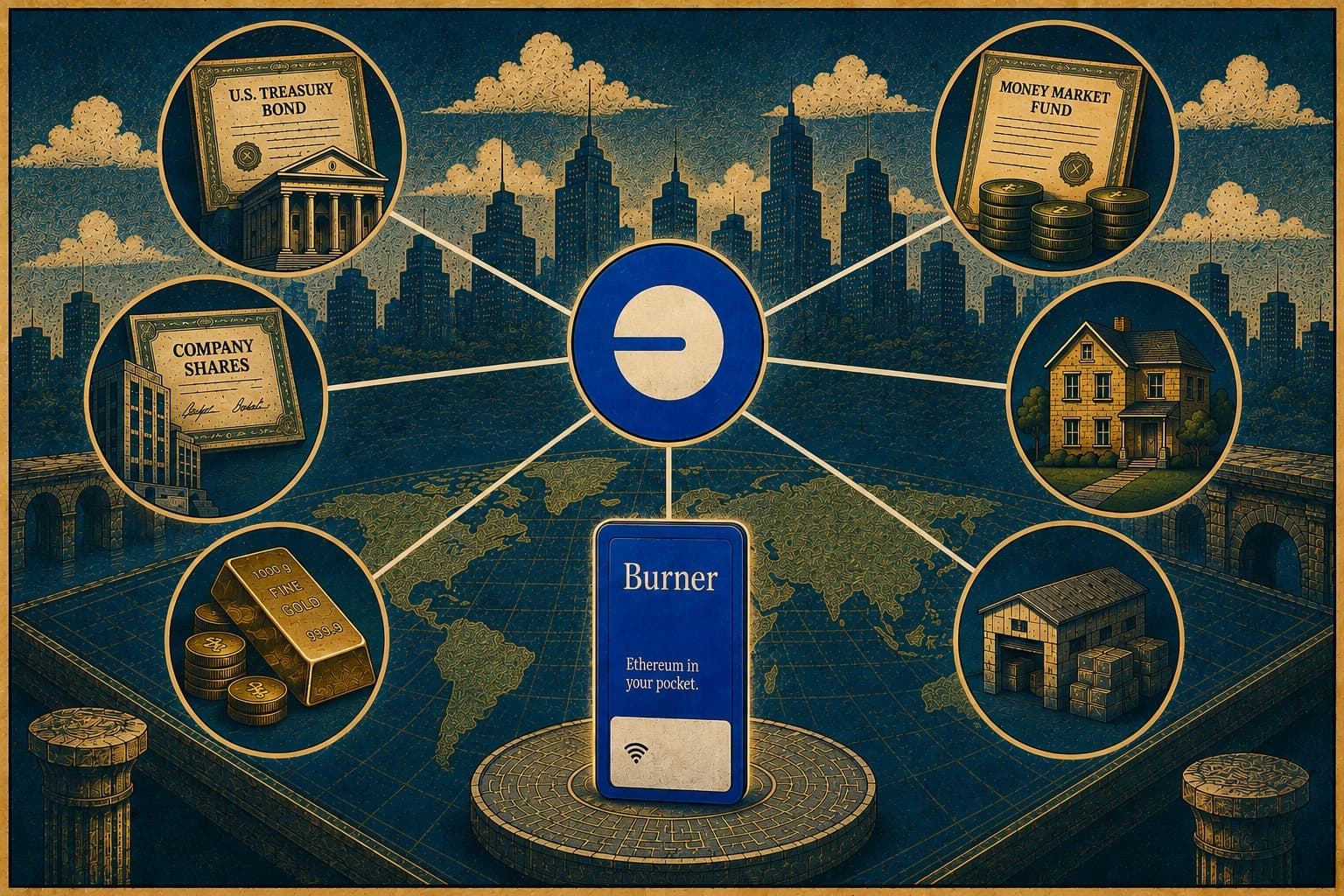
A real-world asset is something that exists off the blockchain, like a US Treasury bond, a money market fund, a bar of gold, or a share of stock, represented on-chain as a token. The token isn’t a new asset with value of its own. It’s a claim on the real one, recorded on a blockchain so it can be moved, split, and held the way you’d hold any cryptocurrency.